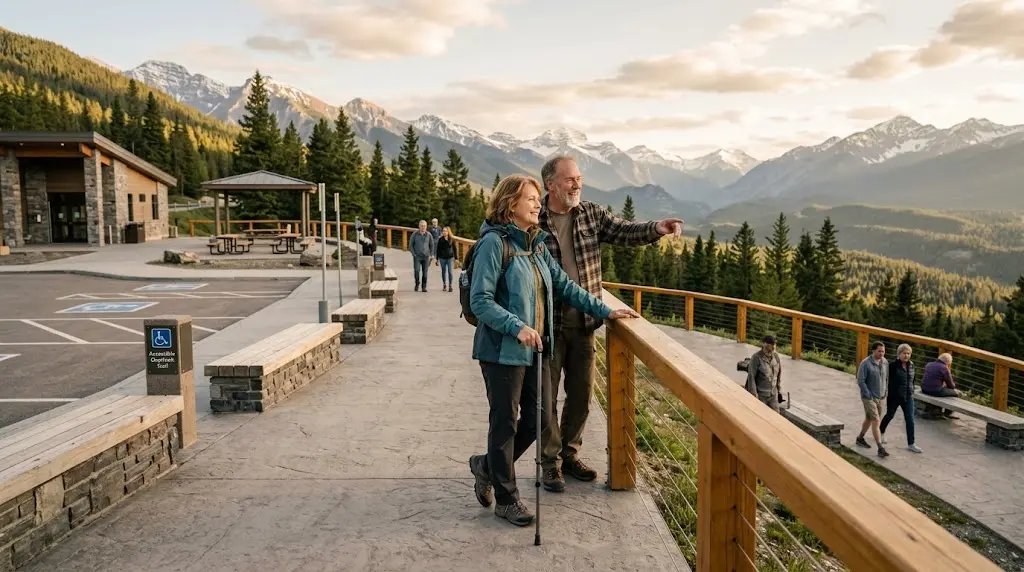
When choosing a destination, it is useful to think beyond whether a place is officially labeled accessible. Trail surfaces, slopes, distances between attractions, parking arrangements, transportation, rest areas, weather, and the availability of alternative sightseeing options can all affect how comfortable a trip feels.
What Makes a Destination Comfortable for Limited Mobility?
A mobility-friendly destination does not necessarily mean that every attraction is completely wheelchair accessible. Instead, it should provide enough options for travelers to adjust their plans when walking becomes uncomfortable.
Look for destinations with:
- Paved sidewalks and relatively level routes
- Accessible parking close to major attractions
- Scenic viewpoints that can be reached without long hikes
- Accessible public transportation or shuttle services
- Hotels with elevators and accessible room options
- Restaurants and attractions with convenient entrances
- Benches, rest areas, and places to sit during sightseeing
- Short trails or boardwalks as alternatives to strenuous hikes
- Drive-through or scenic-road experiences
- Flexible attractions that can be enjoyed at different activity levels
These features allow you to change your plans during the day instead of having to end an outing completely when mobility becomes more difficult.
Best Types of Places to Visit With Occasionally Limited Mobility
There is no single destination that will suit every traveler. Mobility needs can change from one person to another, and even from one day to the next. The following types of destinations can therefore be useful starting points when planning a comfortable vacation.
1. Scenic Cities With Accessible Attractions
Large cities can be surprisingly practical because they often have hotels, restaurants, museums, attractions, taxis, public transportation, and other services concentrated within relatively small areas.
Instead of planning a full day of walking, you can visit one attraction, take a break, and then use transportation to reach the next stop.
For travelers interested in the Pacific Northwest, our guide to the best places to visit in Seattle can help you explore the city while building a flexible itinerary.
2. National Parks With Scenic Drives and Short Walks
National parks can be excellent choices when the goal is to experience nature without completing long hikes. Many parks offer scenic roads, overlooks, visitor centers, picnic areas, and viewpoints where much of the scenery can be enjoyed with limited walking.
The key is to research individual attractions rather than assuming that an entire park will have the same accessibility conditions. A destination can contain both very accessible areas and extremely rugged trails.
Travelers who enjoy nature can also explore destinations featured in our guide to places to visit near Great Smoky Mountains National Park, where sightseeing options can be combined with shorter stops and scenic drives.
3. Coastal Destinations
Coastal areas often provide sightseeing opportunities that do not require strenuous hiking. Waterfront promenades, scenic overlooks, harbor areas, beaches, museums, restaurants, and boat tours can create a varied itinerary.
A coastal trip can also be structured around short outings. Instead of spending several hours walking, you can enjoy a viewpoint, have lunch, return to your accommodation for a break, and continue later.
For broader coastal inspiration, consider our guide to places to visit on the West Coast.
4. Road-Trip Destinations
Road trips can be particularly useful when mobility varies throughout the day. Having a vehicle allows travelers to move between attractions without depending entirely on long walks or complicated transportation connections.
Scenic road trips also make it possible to enjoy landscapes from the vehicle, stop at viewpoints, and choose only the attractions that match your energy level.
For example, our guide to places to visit in Utah from Las Vegas covers a region where scenic drives and viewpoints can form an important part of the travel experience.
Destinations Worth Considering
Yosemite National Park, California
Yosemite can be a rewarding destination for travelers who want dramatic scenery without making every activity a demanding hike. Yosemite Valley contains major landmarks, waterfalls, viewpoints, and visitor facilities, allowing travelers to build an itinerary around shorter walks and scenic stops.
The important consideration is to plan individual activities according to personal comfort. Some trails are strenuous, while other sightseeing opportunities require considerably less physical effort.
Acadia National Park, Maine
Acadia combines coastal scenery, mountain landscapes, scenic roads, viewpoints, and accessible areas. Travelers who cannot comfortably manage long hikes can focus on driving routes, scenic overlooks, visitor facilities, and shorter walks.
If you are planning a broader New England trip, our guide to places to visit in Maine with family provides additional destination ideas.
Great Smoky Mountains National Park
The Great Smoky Mountains are particularly appealing for travelers who enjoy mountain scenery but do not necessarily want to spend an entire day hiking. Scenic roads, overlooks, visitor centers, picnic areas, and shorter walking opportunities allow visitors to experience the landscape at different activity levels.
Weather and trail conditions can affect accessibility, so checking current park information before departure is an important part of planning.
Mount Rainier National Park, Washington
Mount Rainier offers another example of a destination where scenic viewpoints and visitor areas can complement hiking. Travelers can choose viewpoints and paved areas when longer or uneven trails are not suitable.
The surrounding Pacific Northwest also provides plenty of opportunities for a broader vacation. You can compare the experience with places to visit in Oregon and Washington when creating a regional itinerary.
Yellowstone National Park
Yellowstone is a strong option for travelers who want to experience dramatic landscapes and wildlife while relying heavily on roads and designated viewpoints. A well-planned itinerary can include scenic drives, overlooks, visitor centers, and selected boardwalk areas instead of long hikes.
Because Yellowstone is enormous, minimizing unnecessary walking can also mean choosing accommodations and sightseeing routes carefully.
City Trips Can Be Easier Than Wilderness Trips
If your mobility varies considerably, a city vacation may sometimes be easier than a remote outdoor destination. Cities usually provide more choices when you need to change plans.
You can spend the morning at a museum, take a break at your hotel, enjoy a restaurant in the afternoon, and visit a scenic attraction later in the day. This flexibility can be valuable when mobility is occasionally limited rather than consistently restricted.
San Francisco is one example of a destination where travelers can combine neighborhoods, waterfront attractions, cultural sites, viewpoints, and food experiences. Our guide to places to visit in San Francisco for free can provide additional ideas for building a flexible itinerary.
Seattle is another city worth considering, particularly for travelers who want a combination of urban attractions and nearby natural scenery. You can also explore places to visit in Seattle and Washington State for ideas beyond the central city.
How to Plan a Comfortable Mobility-Friendly Vacation
Choose Fewer Attractions Each Day
A common mistake is trying to fit too many attractions into one day. When mobility is occasionally limited, a slower itinerary can be much more practical.
Instead of visiting six attractions, consider choosing two or three primary stops and leaving additional time for rest. This creates flexibility if one location takes longer than expected.
Prioritize Location When Booking Accommodation
A hotel with an excellent location can reduce the amount of walking required every day. Look for accommodations near restaurants, attractions, transportation, or the main sightseeing area.
An elevator, accessible entrance, suitable bathroom configuration, and convenient parking can also make a meaningful difference.
Use Scenic Drives to Reduce Walking
Scenic drives are useful because they allow travelers to experience landscapes while remaining relatively comfortable. Stop at viewpoints when possible, and avoid feeling pressured to complete every nearby trail.
This approach works particularly well in regions such as Utah, Colorado, the Pacific Northwest, and the Great Smoky Mountains.
For another regional planning idea, explore the best places to visit in Colorado.
Build Rest Stops Into the Schedule
Rest should be treated as part of the itinerary rather than something that happens only when exhaustion sets in. A short break between attractions can help preserve energy for the rest of the day.
Check Accessibility Details Before Leaving
Do not rely only on an “accessible” label. Check the actual distance, slope, surface, parking arrangement, entrance configuration, restroom access, transportation options, and any temporary restrictions that could affect your visit.
This is especially important for national parks and outdoor attractions because weather, construction, erosion, seasonal conditions, and maintenance can change how an area can be accessed.
Season Can Make a Major Difference
Weather is an important consideration when mobility is occasionally limited. Extreme heat can make walking more tiring, while snow and ice can create additional challenges.
Shoulder seasons can sometimes offer comfortable temperatures, although conditions vary by destination. Always consider the terrain and weather forecast before planning outdoor activities.
For travelers interested in colder destinations, our guides to places to visit in New York in winter and the best places to visit during winter holidays can provide seasonal inspiration.
Other Comfortable Travel Ideas in the United States
Not every mobility-friendly vacation needs to revolve around national parks. Travelers can also consider relaxed coastal towns, cultural destinations, scenic cities, and family-oriented locations.
For example, Napa Valley with family can be approached through scenic drives, food experiences, and carefully selected stops rather than long walking excursions.
Florida can also provide opportunities for a flexible vacation. If you are considering the state, explore the best place to visit in Florida for additional destination ideas.
For travelers looking for a historic destination with a slower sightseeing pace, places to visit in St. Augustine for free can also be useful when planning a budget-conscious itinerary.
Mobility-Friendly Travel Tips
- Call hotels directly if you need to confirm specific accessibility features.
- Ask attractions about accessible entrances, parking, seating, and transportation.
- Carry comfortable footwear suitable for the actual terrain.
- Keep daily plans flexible instead of scheduling every hour.
- Choose attractions with nearby parking whenever possible.
- Consider taxis, rideshares, shuttles, or accessible public transportation.
- Take breaks before you become exhausted.
- Check weather and trail conditions before visiting outdoor attractions.
- Keep a backup attraction available in case the original plan is uncomfortable.
- Ask about temporary construction or route changes before arrival.
Frequently Asked Questions
What is the best place for someone with occasionally limited mobility to visit?
There is no universal answer because mobility needs differ. Destinations with scenic drives, accessible viewpoints, convenient transportation, short walking routes, and plenty of places to rest can be particularly practical.
Are national parks suitable for people with limited mobility?
Many national parks offer accessible facilities and selected trails, viewpoints, visitor centers, or transportation options. However, accessibility can vary considerably within the same park, so individual locations should be checked before visiting.
Is a city vacation easier than a national park trip?
It can be, especially when you benefit from nearby restaurants, hotels, transportation, museums, and other attractions. Cities can make it easier to shorten an outing or change plans during the day.
How can I reduce walking during a vacation?
Choose centrally located accommodation, use transportation between attractions, select scenic drives, prioritize viewpoints close to parking, and schedule regular rest periods.
Should I choose a destination based only on an accessibility label?
No. Accessibility labels are useful starting points, but individual needs vary. Check specific details such as slopes, surfaces, distances, parking, entrances, restrooms, transportation, and current conditions before traveling.
Final Thoughts
The best place for someone with occasionally limited mobility is ultimately a destination that gives you choices. Scenic drives, accessible viewpoints, comfortable accommodation, convenient transportation, short walks, cultural attractions, and flexible schedules can make travel much easier without taking away the sense of adventure.
Rather than building a vacation around how much walking you can complete, build it around how many enjoyable experiences you can comfortably fit into the day. With thoughtful planning and realistic pacing, national parks, cities, coastal destinations, and road trips can all become possibilities.
For more inspiration, you can also explore top places to visit in the United States, the best places to visit in the US during summer, and places to visit in Northern New York while building a personalized travel plan.