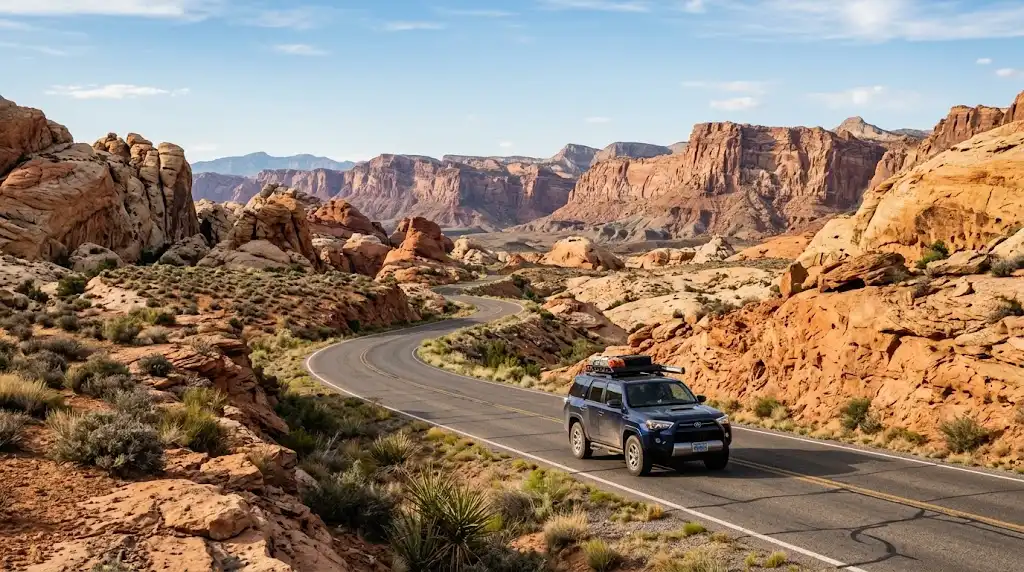
Las Vegas is more than a destination for entertainment, dining, and nightlife. Its location in the Southwest makes it a convenient starting point for exploring some of Utah’s most dramatic landscapes. Within a road trip from Las Vegas, travelers can reach towering red-rock cliffs, narrow canyons, desert viewpoints, alpine scenery, and some of the most recognizable national parks in the American West.
Why Start a Utah Road Trip From Las Vegas?
Las Vegas provides a practical gateway to southwestern Utah. Instead of flying directly into Utah, many travelers can use Las Vegas as the starting point for a scenic driving itinerary.
The biggest advantage is flexibility. A road trip allows you to stop at viewpoints, small towns, state parks, scenic roads, and natural attractions along the way instead of traveling directly from one major destination to another.
If you want more ideas for attractions around your starting point, explore our guide to natural places to visit in Las Vegas.
1. St. George, Utah
St. George is one of the most convenient first stops when traveling from Las Vegas into Utah. Its location in southwestern Utah makes it a useful base for exploring nearby red-rock landscapes and outdoor attractions.
The city itself provides restaurants, accommodations, parks, and services that make it practical for an overnight stop. Travelers can also use St. George as a base for visiting Snow Canyon State Park and other nearby attractions.
For families, couples, and road-trippers who do not want to drive directly from Las Vegas to Zion, St. George provides an easy way to break up the journey.
2. Snow Canyon State Park
Snow Canyon State Park offers an early introduction to the red-rock scenery of southern Utah. The landscape includes sandstone cliffs, lava formations, desert vegetation, and scenic viewpoints.
Because the park is close to St. George, it can be added to an itinerary without requiring a major detour. Travelers can explore scenic roads and trails before continuing toward Zion National Park.
The park is particularly useful for visitors who want to experience Utah’s landscape without immediately entering one of the state’s busiest national parks.
3. Zion National Park
Zion National Park is the most natural centerpiece for a Utah road trip from Las Vegas. Its enormous sandstone cliffs, canyon landscapes, hiking trails, and scenic drives make it one of the region’s defining destinations.
Visitors can spend time around Zion Canyon, explore suitable hiking trails, enjoy viewpoints, and experience the Virgin River environment. Travelers with limited time can see major areas in a day, while a longer stay allows more opportunities for hiking and exploration.
For many travelers, Zion is the point where a Las Vegas getaway becomes a genuine Utah national parks road trip.
4. Springdale
Springdale sits immediately outside Zion National Park and is one of the most convenient places to stay when visiting the park.
The town offers accommodations, restaurants, shops, and services aimed at visitors exploring Zion. Staying nearby can also reduce the amount of driving required each day, leaving more time for hiking and sightseeing.
If your itinerary includes Zion, consider spending at least one night in the area rather than treating the park only as a quick stop between Las Vegas and Bryce Canyon.
5. Zion-Mount Carmel Highway
The route connecting Zion’s main canyon area with the eastern side of the park provides a spectacular driving experience. The landscape changes dramatically as the road passes through red-rock formations and mountainous terrain.
The famous Zion-Mount Carmel Tunnel is another memorable feature of the route. Travelers should check current park and road conditions before driving through this section, particularly when using larger vehicles.
This route is especially valuable because the drive itself becomes part of the sightseeing experience rather than simply transportation between destinations.
6. Bryce Canyon National Park
Bryce Canyon National Park is one of the most distinctive places to visit in Utah from Las Vegas. Instead of Zion’s enormous canyon walls, Bryce is famous for its dense collection of orange, pink, and white hoodoos.
The Bryce Amphitheater provides some of the park’s most recognizable views. Travelers can enjoy rim viewpoints or choose from hiking routes that descend into the formations.
Bryce Canyon is also located at a higher elevation than many other southern Utah destinations, so temperatures can be considerably cooler. Pack accordingly, particularly outside the summer season.
Travelers interested in additional seasonal destinations can compare this trip with our guide to places to visit during winter holidays.
7. Red Canyon
Red Canyon is an excellent stop between the western part of southern Utah and Bryce Canyon. Its red-rock formations create a smaller-scale introduction to the scenery that continues into the Bryce region.
For road-trippers, Red Canyon is valuable because it turns the drive toward Bryce into part of the experience. Short hikes, viewpoints, and scenic stops can make the journey more interesting.
8. Cedar Breaks National Monument
Cedar Breaks National Monument offers another high-elevation landscape in southern Utah. Its amphitheater of colorful rock formations provides a different perspective from both Zion and Bryce Canyon.
The monument can work particularly well for travelers who have additional time after visiting Zion. Because elevation and seasonal conditions can affect access, check conditions before planning a specific route.
9. Kanab, Utah
Kanab is an important base for exploring southern Utah and nearby desert landscapes. Its location makes it useful for travelers building an itinerary that includes Zion, Bryce Canyon, Grand Staircase-Escalante, or destinations toward the Arizona border.
Kanab is also a practical place to spend the night when you want to break a longer road trip into manageable sections.
10. Grand Staircase-Escalante National Monument
Grand Staircase-Escalante provides a much less urban and more remote experience than Las Vegas. The region is characterized by vast desert landscapes, cliffs, canyons, mesas, and geological formations.
It is best suited to travelers who have extra time and are comfortable planning for remote areas. Cell service, fuel availability, weather, road conditions, and hiking requirements can vary significantly across the region.
If you enjoy unusual landscapes and less conventional destinations, this type of trip can be an excellent addition to a broader Western itinerary.
11. Capitol Reef National Park
Capitol Reef National Park is farther from Las Vegas than Zion and Bryce Canyon, but it becomes a worthwhile addition when you have several days available.
The park features sandstone cliffs, domes, canyons, natural formations, and scenic roads. Its location also makes it an important part of longer southern Utah road trips connecting Bryce Canyon with central and eastern Utah.
Travelers with enough time can combine Capitol Reef with Scenic Byway 12 for a road trip that emphasizes scenery rather than simply reaching the next national park.
12. Scenic Byway 12
Utah’s Scenic Byway 12 is one of the most useful routes to understand when planning a multi-day road trip through southern Utah. The road connects several landscapes and communities, making the journey between major destinations part of the adventure.
Rather than rushing from Zion to Bryce Canyon and then directly toward Capitol Reef, travelers can use this route to experience changing terrain, high-elevation landscapes, desert formations, and smaller communities.
13. Arches National Park
Arches National Park is a longer extension from Las Vegas, but it is one of Utah’s most recognizable destinations. The park is known for natural sandstone arches, red-rock landscapes, and scenic viewpoints.
Because Arches is considerably farther east than Zion, it makes more sense for a longer road trip than a short weekend itinerary. Travelers who include it should plan adequate driving time and consider adding Moab as an overnight base.
14. Canyonlands National Park
Canyonlands National Park can be paired naturally with Arches when planning an extended Utah road trip. The park features enormous canyon landscapes, mesas, buttes, and expansive desert views.
Its scale makes it particularly rewarding for travelers who enjoy scenic overlooks and large wilderness landscapes. Because the park covers a substantial area, choosing the district you want to explore before arrival can make your visit more efficient.
15. Moab
Moab is one of the most useful bases for travelers exploring eastern Utah. The town provides access to Arches National Park, Canyonlands, Colorado River activities, scenic drives, and outdoor recreation.
Moab is best incorporated into an itinerary when you have enough time to travel farther east from the Zion-Bryce region. A rushed visit can involve substantial driving without enough time to experience the destinations properly.
16. Coral Pink Sand Dunes State Park
Coral Pink Sand Dunes State Park provides a dramatic change from the large canyon landscapes found at Zion and Bryce Canyon. Its rolling orange and pink sand dunes create a landscape that feels completely different from the surrounding national parks.
The park can be especially interesting for photographers and families looking for a shorter outdoor stop. Its location near Kanab also makes it possible to combine the dunes with other southern Utah destinations.
17. Cedar City
Cedar City can serve as another practical overnight or activity base when traveling through southwestern Utah. Its location provides access to Cedar Breaks and other high-elevation landscapes.
For travelers who prefer not to spend every night near a national park gateway, Cedar City can provide an alternative stop on a longer itinerary.
18. Sand Hollow State Park
Sand Hollow State Park combines red-rock scenery with a large reservoir and opportunities for water-based recreation. It is located near St. George, making it a convenient addition near the beginning or end of a Las Vegas-to-Utah road trip.
The destination can provide a different type of experience from hiking-focused national parks, particularly during warmer months.
How Far Is Utah From Las Vegas?
The answer depends on which Utah destination you choose. St. George is relatively close to Las Vegas, while Zion requires additional driving and Bryce Canyon is farther north and east. Capitol Reef, Arches, and Canyonlands require substantially more time on the road.
This means there is no single Las Vegas-to-Utah distance that applies to the entire state. Your itinerary should be organized around a specific region rather than attempting to cover Utah as a whole.
Best Utah Road Trips From Las Vegas by Trip Length
2 Days: Las Vegas to Zion
For a short trip, concentrate on St. George, Zion National Park, and Springdale. This keeps the itinerary manageable and provides enough time to experience the canyon landscape without spending most of the trip driving.
3 Days: Zion and Bryce Canyon
With three days, add Bryce Canyon after Zion. The two parks provide dramatically different landscapes, making them an excellent pairing.
4 to 5 Days: Zion, Bryce, and Capitol Reef
A four- or five-day itinerary allows you to slow down and include Scenic Byway 12, Capitol Reef, or additional stops around the Bryce region.
6 to 7 Days: Southern and Eastern Utah
With nearly a week, you can consider extending the route toward Moab and adding Arches and Canyonlands. This becomes a much more substantial Utah road trip, so plan overnight stops rather than trying to return to Las Vegas every night.
Best Time for a Utah Road Trip From Las Vegas
The ideal season depends on the destinations and activities you choose. Spring and fall can provide comfortable conditions for many outdoor activities, while summer brings longer daylight hours but can also bring substantial heat at lower elevations.
Winter can transform Bryce Canyon and other higher-elevation destinations, but snow and road conditions may affect travel plans. Before leaving Las Vegas, check weather, road conditions, park alerts, and any seasonal closures for the destinations on your route.
Tips for Driving From Las Vegas to Utah
- Plan fuel stops: Do not assume fuel will always be available in remote desert areas.
- Carry sufficient water: Desert conditions can become demanding, especially during warmer months.
- Check park conditions: Weather and road conditions can change quickly.
- Allow extra driving time: Scenic routes often involve stops for viewpoints, photography, meals, and short hikes.
- Book accommodations strategically: Staying near major parks can save significant driving time.
- Do not overpack the itinerary: Fewer destinations with more time at each location often create a better road-trip experience.
- Respect desert environments: Stay on designated routes where required and follow park regulations.
Other U.S. Road-Trip Destinations
Utah is only one part of a much larger Western road-trip network. Travelers can compare this itinerary with places to visit on the West Coast, places to visit in Oregon and Washington, and places to visit in Colorado.
If you are planning a wider U.S. vacation, our guides to top places to visit in the US and the best places to visit in the US in summer provide additional destination ideas.
For travelers interested in seasonal trips, you can also explore places to visit in New York during winter, places to visit in the Northeast in winter, and places to visit in the Midwest in spring.
Final Thoughts
The best places to visit in Utah from Las Vegas depend on the amount of time you have and how much driving you want to include. Zion is the most straightforward major destination, while Bryce Canyon adds a contrasting landscape. With additional days, Capitol Reef, Scenic Byway 12, Arches, Canyonlands, and Moab can turn the journey into a much larger Utah adventure.
The most effective approach is to choose a realistic route, allow time for scenic stops, and avoid trying to see every major attraction in a single trip. Whether you have two days or a full week, starting in Las Vegas gives you access to an impressive collection of Utah’s desert landscapes and national parks.