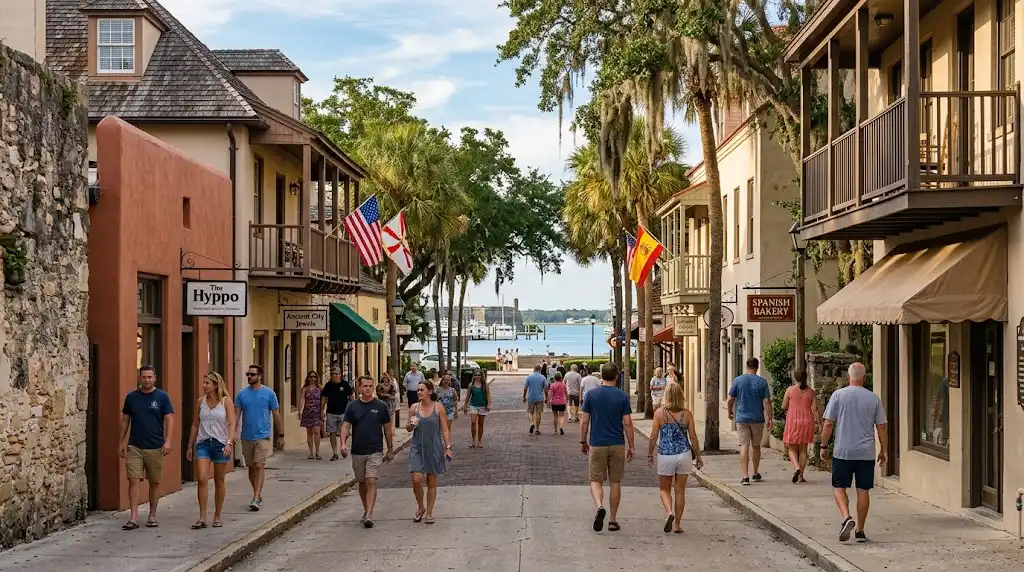
1. Walk Along St. George Street
St. George Street is one of the easiest places to start a free St. Augustine itinerary. The pedestrian-friendly historic street passes through the heart of the city’s historic district and is lined with historic buildings, shops, restaurants, courtyards, and street activity.
You can spend time simply walking through the area, looking at the architecture, listening to performers, and exploring nearby side streets without purchasing an attraction ticket.
2. Explore Plaza de la Constitución
Plaza de la Constitución is a central public gathering place in historic downtown St. Augustine. It is surrounded by important buildings and historic landmarks, making it a useful starting point for a self-guided walking tour.
Bring a camera, find a shaded place to sit, and use the plaza as a base for exploring nearby streets and historic sites on foot.
3. See the Old City Gates
The Old City Gates are a simple but worthwhile stop for travelers interested in St. Augustine’s colonial history. The historic gates mark an entrance to the old city area and sit near St. George Street.
Because visiting the gates does not require an attraction ticket, they are particularly useful for travelers building a free walking itinerary.
4. Visit the Governor’s House Cultural Center
The Governor’s House is located near Plaza de la Constitución and provides another opportunity to experience St. Augustine’s history without paying a standard attraction admission fee.
Exhibits and cultural displays can make this a useful stop when you want to combine sightseeing with a better understanding of the city’s Spanish colonial past.
5. Walk the Bayfront
A walk along St. Augustine’s waterfront is one of the easiest free activities in the city. The bayfront provides views across the water, historic surroundings, and opportunities to watch boats and people moving through the downtown area.
It is also a good place to slow down between attractions. Instead of paying for another activity, take a walking break and enjoy the scenery.
6. Explore Historic Lincolnville
Historic Lincolnville offers a different perspective on St. Augustine. The neighborhood is associated with important African American history and the city’s civil rights story.
Walking through the neighborhood lets visitors see historic architecture and community landmarks while learning more about the people and events that shaped St. Augustine.
7. Visit Mission Nombre de Dios Grounds
The grounds around Mission Nombre de Dios provide another opportunity to experience St. Augustine’s history without focusing on a paid attraction. The site includes historic and religious landmarks in a peaceful setting near the waterfront.
Visitors interested in the city’s early history can combine this stop with other nearby historic locations for a longer walking route.
8. Explore Fort Matanzas National Monument
Fort Matanzas National Monument is an excellent option for travelers looking for a historic experience that does not require the standard admission fee associated with some other attractions.
The area provides an opportunity to experience coastal scenery and learn about the defensive history surrounding St. Augustine. Check the National Park Service before visiting because operating arrangements, ferry access, and visitor procedures can change.
9. Spend Time at Vilano Beach
For travelers who want a break from historic buildings, Vilano Beach offers an easy way to enjoy the Atlantic coastline. Walking along the shore, watching the waves, photographing the sunrise, or simply relaxing on the beach can make for a low-cost part of your St. Augustine trip.
Remember that while beach access itself can be free, parking rules and fees vary by location and can change. Check local signage before leaving your vehicle.
10. Watch the Sunrise or Sunset
You do not need a tour reservation to enjoy one of St. Augustine’s natural spectacles. Find an appropriate public beach or waterfront viewing area and plan your visit around sunrise or sunset.
This is especially useful for couples, photographers, and families looking for something memorable to do after spending the day exploring downtown.
11. Walk Across the Bridge of Lions
The Bridge of Lions is one of St. Augustine’s recognizable landmarks. Walking around the bridge area can provide views of the waterfront, historic downtown, and surrounding waterways.
Rather than treating the bridge only as a transportation route, include it as part of a walking itinerary that connects downtown with the waterfront.
12. Visit Fort Mose’s Outdoor Grounds
Fort Mose Historic State Park is connected to an important chapter of African American history in Florida. The surrounding grounds provide opportunities for walking, nature observation, and learning about the site’s historical significance.
Some facilities or exhibits may involve a fee, so budget travelers should distinguish between exploring the grounds and entering paid facilities before planning their visit.
13. Discover Free Art and Cultural Events
St. Augustine has a lively arts and events calendar, and some exhibitions, art walks, outdoor performances, and community events are available without admission charges.
Event schedules change throughout the year, so check the city’s current tourism listings before your trip. A free event can turn an ordinary evening into one of the most enjoyable parts of a budget itinerary.
14. Explore the Historic Cemeteries
Historic cemeteries can provide a quieter way to learn about St. Augustine’s past. Tolomato Cemetery and other historic burial grounds are connected to the city’s long history and offer an opportunity to understand the people who lived in the area during earlier periods.
Access and tour schedules can vary, so verify opening information before making a cemetery visit part of your itinerary.
15. Wander Through Historic Downtown
One of the best ways to experience St. Augustine on a budget is simply to walk. Historic Downtown contains a concentration of old buildings, public squares, narrow streets, churches, waterfront views, shops, and architectural details.
You can create your own walking route and stop whenever something catches your attention. This approach also makes it easy to combine several free locations into one afternoon.
How to Plan a Free Day in St. Augustine
A free day does not have to mean staying in one location. Start in the historic downtown area and walk toward Plaza de la Constitución and the Old City Gates. Continue along St. George Street before heading toward the bayfront.
After exploring downtown, choose an outdoor destination such as a beach or park. If you are interested in history, add Mission Nombre de Dios, Fort Matanzas, or another publicly accessible historic site to your route.
Travelers planning a broader Florida itinerary can also compare this trip with other destinations covered in our guides to Florida travel destinations, places to visit in Florida, and Florida’s natural, scenic, and cultural sites.
Tips for Visiting St. Augustine on a Budget
- Walk whenever practical: Downtown attractions are concentrated close together.
- Check parking rules: A free attraction can still involve paid parking.
- Bring water: Walking outdoors in Florida can become tiring quickly.
- Pack snacks: Carrying your own food can reduce unnecessary spending.
- Check event schedules: Free concerts and community events change seasonally.
- Verify admission before visiting: A site’s grounds may be free even when a museum, exhibit, or special tour charges admission.
- Plan around the weather: Beaches and outdoor walking routes are much more enjoyable in comfortable conditions.
More Travel Ideas for Budget Travelers
If you enjoy finding affordable attractions, you can continue planning your trip with our guide to free places to visit in Niagara Falls or explore free places to visit in San Francisco for another U.S. destination where walking and sightseeing can form a major part of the experience.
For broader U.S. travel planning, see our guides to top places to visit in the United States, U.S. summer destinations, places to visit along the East Coast, and places to visit on the West Coast.
You can also explore natural places to visit in Las Vegas, Southern California destinations, places to visit in Hawaii, Seattle destinations, and popular places to visit in Texas when building a longer U.S. travel plan.
Frequently Asked Questions
What are the best free places to visit in St. Augustine?
Good options include St. George Street, Plaza de la Constitución, the Old City Gates, the bayfront, historic Lincolnville, Mission Nombre de Dios grounds, selected beaches, and various free cultural events.
Is St. Augustine expensive to visit?
It can be, particularly if you purchase multiple attraction tickets, pay for parking, eat out frequently, and book tours. However, a significant portion of a St. Augustine itinerary can be built around walking, beaches, public spaces, historic neighborhoods, and free events.
Is Castillo de San Marcos free?
The interior of Castillo de San Marcos is generally a paid National Park Service attraction for visitors who do not qualify for an applicable pass or free-admission day. The surrounding area, however, can still be incorporated into a sightseeing walk. Always check current National Park Service fee information before visiting.
Can you visit St. Augustine without spending money on attractions?
Yes. You can spend a day walking through historic downtown, exploring public spaces, viewing architecture, visiting selected free sites, relaxing along the waterfront, and enjoying outdoor areas. You should still budget for transportation, parking where applicable, food, and other personal expenses.
Final Thoughts
St. Augustine is a particularly interesting destination for budget travelers because many of its best experiences do not depend on admission tickets. Walking through the historic district, enjoying the waterfront, visiting public spaces, exploring historic neighborhoods, watching the sunrise, and finding free cultural events can give you a strong sense of the city without a large attraction budget.
Before your trip, check official visitor information for current event schedules, access rules, parking arrangements, and admission policies. With a little planning, you can experience plenty of St. Augustine’s history and coastal character while keeping your travel costs under control.