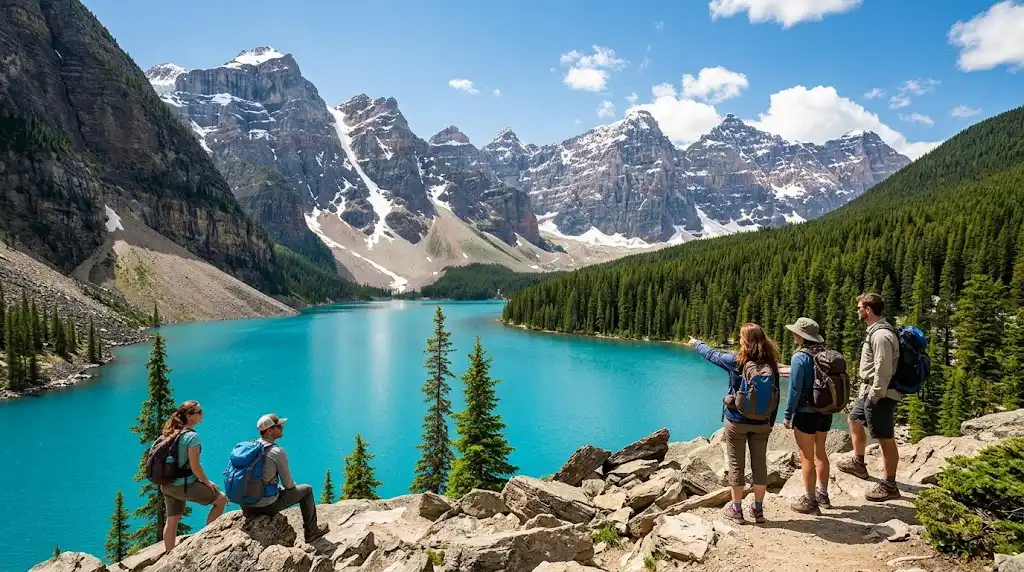
This guide covers some of the most appealing Canadian destinations for a summer vacation, along with what makes each one worth considering.
1. Banff National Park, Alberta
Banff National Park is one of Canada’s most recognizable summer destinations. Located in the Canadian Rockies, the park combines dramatic mountain scenery, glacial lakes, hiking trails, wildlife habitats, and scenic drives.
Lake Louise is one of the best-known places in the park, while Lake Minnewanka and other mountain lakes offer additional opportunities for sightseeing and outdoor activities. Summer is particularly useful for travelers who want access to hiking trails and other warm-weather activities.
Because Banff is extremely popular, planning ahead is important. Parks Canada notes that summer is its busiest season and that July and August can bring larger crowds and busy parking areas.
2. Jasper National Park, Alberta
Jasper National Park provides another way to experience the Canadian Rockies. It is particularly appealing to travelers who want mountain scenery combined with hiking, waterfalls, lakes, and expansive wilderness.
Athabasca Falls and Maligne Canyon are among the area’s notable natural features. The park is also an excellent base for exploring the wider Alberta mountain region.
If you want a Canadian summer vacation centered around nature rather than a major city, Jasper deserves a place on your itinerary.
3. Vancouver, British Columbia
Vancouver offers a combination that is difficult to match: a major city, beaches, parks, mountains, and access to outdoor adventures. Summer is a particularly attractive time to explore the city on foot and spend time outdoors.
Stanley Park provides trails and waterfront scenery close to downtown, while neighborhoods such as Gastown and Granville Island add food, shopping, and cultural experiences to the trip.
Vancouver is also a useful starting point for exploring British Columbia beyond the city. Travelers can build a longer itinerary around the region’s mountains, islands, forests, and coastal communities.
4. Victoria, British Columbia
Victoria is a strong option for travelers who prefer a slower-paced coastal destination. The capital of British Columbia is known for its waterfront setting, historic architecture, gardens, and access to outdoor experiences.
Summer provides comfortable conditions for walking around the Inner Harbour, exploring parks, visiting gardens, and taking excursions around Vancouver Island.
For visitors planning a British Columbia trip, Victoria can work especially well as a complement to Vancouver.
5. Niagara Falls, Ontario
Niagara Falls is one of Canada’s most recognizable natural attractions and an especially popular summer destination. The waterfalls are the main attraction, but the surrounding region offers parks, gardens, viewpoints, restaurants, and opportunities to explore nearby communities.
Summer’s longer daylight hours make it easier to combine the falls with other activities in the region. If you have additional time, you can explore the surrounding Niagara area rather than treating the waterfalls as a single stop.
Travelers interested in other waterfall destinations can also explore our guide to free places to visit in Niagara Falls.
6. Quebec City, Quebec
Quebec City offers a very different summer experience from the mountain destinations of western Canada. Its historic architecture, walkable streets, French-Canadian culture, restaurants, public squares, and fortified old city create an atmosphere that feels distinct from many other North American destinations.
Spend time walking through Old Quebec, exploring the historic district, visiting viewpoints, and enjoying the city’s summer events and outdoor dining.
For travelers who want history and culture alongside pleasant summer weather, Quebec City can be an excellent choice.
7. Montreal, Quebec
Montreal is another strong choice for a summer city break. The city combines French heritage with contemporary food, arts, festivals, neighborhoods, parks, and nightlife.
Summer is an active period for outdoor events and cultural activities. Travelers can explore Old Montreal, walk along the waterfront, visit markets, spend time in parks, or build an itinerary around the city’s festival calendar.
8. Prince Edward Island
Prince Edward Island is ideal for travelers who want beaches, coastal scenery, small communities, and a relaxed island atmosphere.
Prince Edward Island National Park stretches along the island’s coastline and includes sandy beaches, dunes, trails, and scenic areas. The destination is particularly well suited to travelers who enjoy combining outdoor activities with local food and coastal sightseeing.
Summer also makes it easier to explore the island by car, giving travelers flexibility to visit beaches, lighthouses, villages, and other coastal attractions.
9. Cape Breton Highlands, Nova Scotia
Cape Breton Highlands National Park is a standout destination for scenic drives and coastal landscapes. The Cabot Trail is particularly well known for its combination of ocean views, highlands, forests, and dramatic roads.
Summer is a practical season for exploring the region by car and stopping for hikes, viewpoints, beaches, and small coastal communities.
Travelers who enjoy road trips should consider spending several days in Cape Breton rather than trying to experience the region in a single day.
10. Halifax, Nova Scotia
Halifax combines a walkable waterfront with maritime history, museums, restaurants, cultural attractions, and access to nearby coastal destinations.
A summer visit allows travelers to spend more time outdoors along the waterfront and use Halifax as a base for exploring other parts of Nova Scotia.
It is particularly suitable for travelers who want a combination of city experiences and Atlantic Canadian scenery.
11. Gros Morne National Park, Newfoundland and Labrador
Gros Morne National Park is a spectacular option for travelers who want dramatic landscapes and outdoor adventure. The park features mountains, fjords, forests, coastlines, and unusual geological formations.
Summer is an excellent period for hiking, camping, sightseeing, and exploring the park’s landscapes. Parks Canada also highlights Gros Morne as a destination with summer hiking, biking, and camping opportunities.
Because Newfoundland and Labrador is geographically distant from many major Canadian cities, this destination works best as part of a dedicated regional trip.
12. Fundy National Park, New Brunswick
Fundy National Park is a great choice for travelers interested in forests, waterfalls, coastal scenery, and the Bay of Fundy’s famous tides.
The park offers hiking, paddling, camping, and other outdoor activities. Its location also makes it possible to combine a national park visit with a broader Atlantic Canada road trip.
13. Kouchibouguac National Park, New Brunswick
Kouchibouguac National Park is an appealing alternative for travelers who want beaches and outdoor activities without focusing entirely on the most famous Canadian destinations.
The park features sandy beaches, dunes, waterways, forests, and cycling opportunities. Visitors can spend their summer days hiking, biking, paddling, swimming, or simply relaxing outdoors.
It can also be a useful stop on a New Brunswick and Nova Scotia road trip.
14. Toronto, Ontario
Toronto is a natural choice for travelers who prefer a major city. Summer brings outdoor festivals, waterfront activities, patios, parks, cultural attractions, and longer days for exploring different neighborhoods.
One interesting option is Rouge National Urban Park, which gives visitors access to trails and natural landscapes within the Greater Toronto Area.
Toronto can also serve as a convenient starting point for exploring Niagara Falls and other Ontario destinations.
15. Thousand Islands, Ontario
The Thousand Islands region offers a different kind of summer experience, centered around waterways, islands, wildlife, boating, and scenic communities.
Thousand Islands National Park provides opportunities for paddling, boating, hiking, and exploring the area’s distinctive island landscape.
It is a good option for travelers who want water-based activities but do not necessarily want a traditional ocean beach vacation.
How to Choose the Best Place to Visit in Canada in Summer
Canada is too large to treat summer travel as a single destination choice. Instead, choose your destination based on the type of vacation you want.
- For mountain scenery: Banff or Jasper.
- For a city and nature combination: Vancouver or Toronto.
- For history and European-style architecture: Quebec City.
- For festivals, food, and urban culture: Montreal.
- For beaches and coastal scenery: Prince Edward Island or Kouchibouguac.
- For a scenic road trip: Cape Breton Highlands.
- For dramatic wilderness: Gros Morne.
- For waterfalls: Niagara Falls.
- For a maritime city: Halifax.
When Is the Best Time to Visit Canada in Summer?
Summer generally provides the broadest access to outdoor activities across Canada, but conditions vary considerably by region. June can offer long days and the beginning of the warmer season, while July and August are typically the busiest summer travel period.
Parks Canada specifically notes that summer is its most popular season, with larger crowds and busy parking areas especially in July and August. Travelers who want a quieter experience should consider visiting popular destinations outside the busiest periods when practical.
If you are planning other seasonal trips, you can also explore our guides to places to visit in Sweden during summer, summer destinations in the United States, and places to visit in the UAE during summer.
Tips for a Canadian Summer Vacation
- Reserve popular accommodations early: Major national parks and popular cities can become busy during summer.
- Check park conditions before traveling: Trail access, wildfire conditions, road closures, and weather can affect outdoor plans.
- Plan transportation carefully: Canada is enormous, and driving distances between destinations can be much longer than expected.
- Pack for changing weather: Even summer mountain destinations can experience cool mornings and sudden weather changes.
- Allow extra time: Scenic destinations are often better experienced slowly rather than as rushed day trips.
- Consider less-busy alternatives: Parks Canada provides suggestions for destinations that can offer similar experiences with fewer crowds.
- Protect the outdoors: Follow local park rules, stay on designated trails, and respect wildlife.
More Places to Explore
Canada is only one part of a much larger collection of international travel possibilities. If you are comparing summer destinations, you can explore our guides to places to visit on the West Coast, places to visit along the East Coast, places to visit in the Northeast, and places to visit in the Midwest.
For international inspiration, see our guides to Portugal for first-time visitors, Belgium in autumn, less-touristy places in Italy, Muscat and Oman, South London, and the Cairngorms.
Frequently Asked Questions
What is the best place to visit in Canada in summer?
There is no single destination that suits every traveler. Banff and Jasper are strong options for mountain scenery, Vancouver combines city life with nature, Quebec City offers historic and cultural experiences, and Prince Edward Island provides beaches and coastal scenery.
Is summer a good time to visit Canada?
Yes. Summer is the most popular season for many Parks Canada destinations because more outdoor activities and facilities are available. Hiking, paddling, biking, camping, beaches, and historic experiences are among the activities available across the country.
What are the best summer destinations in Canada for families?
Families can consider destinations such as Niagara Falls, Vancouver, Toronto, Banff, Prince Edward Island, and other national park areas. The best choice depends on the children’s ages, preferred activities, transportation, and trip length.
What are the best places in Canada for a summer road trip?
Cape Breton and the Cabot Trail, Atlantic Canada, the Canadian Rockies, British Columbia, and parts of Ontario can all work well for road trips. Choose a route based on realistic driving times rather than trying to cover too much of the country in one vacation.
Final Thoughts
The best place to visit in Canada in summer depends on what you want from your vacation. The Canadian Rockies are ideal for dramatic mountain landscapes, Vancouver blends urban attractions with outdoor adventure, Quebec City and Montreal provide culture and history, while Atlantic Canada offers beaches, coastal scenery, and memorable road trips.
Rather than trying to see all of Canada in one trip, choose one region and explore it thoroughly. That approach gives you more time to enjoy the landscapes, communities, food, trails, and experiences that make a Canadian summer vacation memorable.