If you are also researching broader European destinations, you can explore our guide to the best places to visit in Europe for additional trip ideas.
Why Portugal Is Great for First-Time Visitors
Portugal is an excellent choice for a first European trip because it combines major cities, historic attractions, beaches, food, wine, and outdoor experiences without requiring extremely complicated travel planning.
Lisbon provides colorful neighborhoods, historic landmarks, viewpoints, museums, and access to nearby destinations. Porto offers a different atmosphere with its historic center, Douro River scenery, and wine culture. Meanwhile, the Algarve provides beaches and coastal scenery, while Madeira and the Azores offer more dramatic natural landscapes.
The country’s Atlantic coastline stretches for hundreds of kilometers, creating opportunities for beach holidays, surfing, coastal walks, and scenic road trips.
15 Best Places to Visit in Portugal for First Timers
1. Lisbon
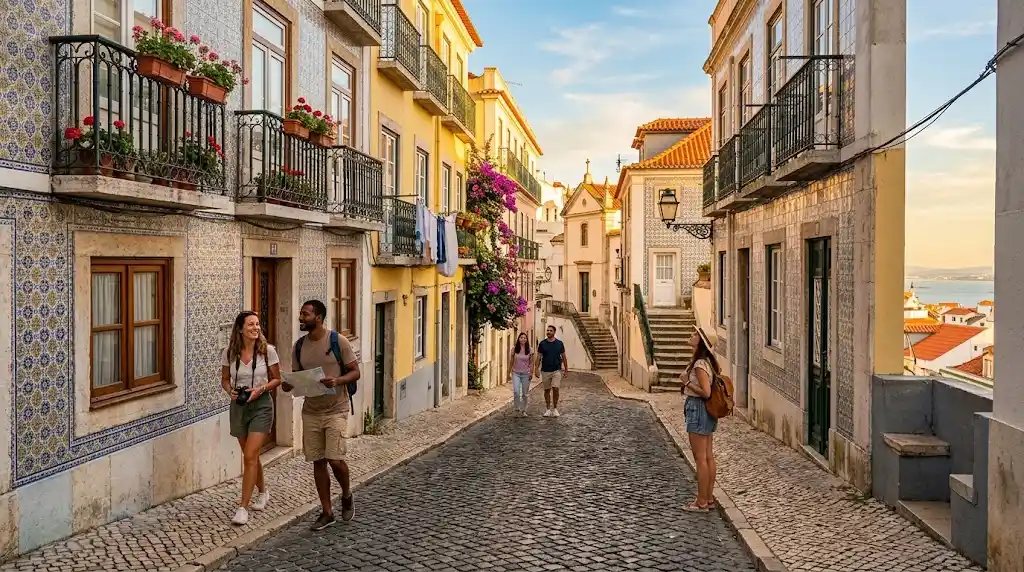
Lisbon is usually the best starting point for first-time visitors to Portugal. The capital combines historic neighborhoods, viewpoints, traditional architecture, waterfront areas, museums, restaurants, and lively evening districts.
Spend time exploring Alfama, Baixa, Chiado, Belém, and the areas around the Tagus River. São Jorge Castle provides impressive city views, while Belém is home to several of Lisbon’s most recognizable historic attractions.
For a more detailed city guide, check out our article on the top places to visit in Lisbon, Portugal.
Best for: First-time visitors, history, food, architecture, nightlife, and city breaks.
2. Porto
Porto is one of Portugal’s most atmospheric cities and an excellent addition to a first-time itinerary. Its historic center sits along the Douro River and is known for traditional buildings, bridges, viewpoints, narrow streets, and port wine.
Explore Ribeira, walk across the Dom Luís I Bridge, visit historic churches, and spend time beside the river. You can also use Porto as a base for exploring northern Portugal.
Portugal’s official tourism information identifies Porto as one of the country’s key city destinations and notes the importance of its historic center and connection with the Douro Valley.
Best for: Architecture, food, wine, photography, river views, and culture.
3. Sintra
Sintra is one of the easiest day trips from Lisbon and one of the most memorable destinations for first-time visitors.
The town is surrounded by green hills and is famous for palaces, gardens, historic estates, and romantic architecture. Pena Palace, the Moorish Castle, Sintra National Palace, and Quinta da Regaleira are among the attractions that make the area special.
Sintra’s cultural landscape has UNESCO World Heritage status, making it an important stop for travelers interested in Portuguese history and architecture.
Portugal’s tourism resources also describe Sintra as a destination close to Lisbon with a combination of historic monuments, forests, palaces, and distinctive landscapes.
Best for: Couples, history lovers, architecture, photography, and day trips.
4. Algarve
The Algarve is the region to consider if beaches and coastal scenery are high on your Portugal itinerary.
The southern region is known for golden beaches, dramatic cliffs, sea caves, coastal towns, and resort destinations. It can work equally well for a relaxing beach holiday or a more active road trip.
Popular areas include Lagos, Albufeira, Faro, Tavira, Carvoeiro, and the surrounding coastline.
If your trip includes other European warm-weather destinations, you may also enjoy our guide to warm places to visit in Europe during winter.
Best for: Beaches, families, couples, coastal drives, swimming, and relaxation.
5. Cascais
Cascais is a stylish coastal town that works particularly well as a short trip from Lisbon.
The destination combines beaches, waterfront walks, restaurants, historic buildings, and easy access to other parts of the Lisbon region. It is a good option when you want to experience Portugal’s coastline without traveling far from the capital.
Cascais can also be combined with Sintra during a longer Lisbon stay.
Best for: Beaches, couples, relaxed day trips, seafood, and coastal scenery.
6. Douro Valley
The Douro Valley offers a completely different side of Portugal. Instead of urban streets and beaches, visitors encounter rolling hills, vineyards, river scenery, traditional estates, and wine-producing landscapes.
The region is especially appealing to travelers interested in wine, food, photography, scenic drives, and slow travel.
A Douro Valley excursion from Porto can make a strong addition to a first-time Portugal itinerary.
Best for: Wine lovers, scenery, photography, couples, and countryside experiences.
7. Coimbra
Coimbra is one of Portugal’s most historically significant cities and is particularly interesting for travelers who want to explore beyond Lisbon and Porto.
The city is famous for its historic university, hilltop setting, old streets, churches, and traditional atmosphere. It can be included when traveling between Lisbon and northern Portugal.
Coimbra is a useful choice for visitors who want to experience a more traditional Portuguese city without the scale of the major tourist centers.
Best for: History, education, architecture, culture, and slower-paced sightseeing.
8. Évora
Located in the Alentejo region, Évora is a strong choice for travelers interested in Roman history, medieval architecture, traditional Portuguese culture, and regional cuisine.
The historic center is compact enough to explore on foot, making Évora particularly suitable for travelers who enjoy wandering through old streets and discovering landmarks at a relaxed pace.
It also provides a useful contrast to the coastal destinations found elsewhere in Portugal.
Best for: History, architecture, culture, food, and heritage travel.
9. Óbidos
Óbidos is a charming walled town that offers a completely different experience from Portugal’s major cities.
Its medieval streets, traditional houses, historic walls, and compact center make it an attractive stop for travelers who want picturesque scenery and a slower travel experience.
Because of its manageable size, Óbidos works well as a day trip or short stop on a wider Portugal itinerary.
Best for: Couples, photography, medieval history, villages, and short trips.
10. Madeira
Madeira is one of Portugal’s most distinctive destinations. The Atlantic island is known for dramatic mountain scenery, lush vegetation, coastal viewpoints, hiking routes, and distinctive local culture.
Madeira is especially appealing if you want your first Portugal trip to include outdoor adventures rather than focusing entirely on cities and historical attractions.
Portugal’s official tourism portal lists Madeira as one of the country’s major destination regions and highlights its rich vegetation and natural landscapes.
Best for: Hiking, nature, scenic drives, adventure, and dramatic landscapes.
11. The Azores
The Azores are another excellent choice for travelers seeking nature and outdoor experiences.
The archipelago offers volcanic landscapes, crater lakes, green hills, coastal scenery, hiking opportunities, and distinctive island environments.
The Azores are better suited to travelers who have additional time because reaching and exploring the islands requires more planning than visiting Lisbon or Porto.
Best for: Nature, hiking, volcanic landscapes, outdoor adventures, and longer trips.
12. Lagos
Lagos is one of the Algarve’s most attractive destinations and a particularly good choice for first-time visitors who want dramatic coastal scenery.
The area is known for beaches, cliffs, sea views, historic streets, and access to coastal excursions. It can serve as a convenient base for exploring western Algarve attractions.
Lagos is especially appealing if you want to combine sightseeing with beach time.
Best for: Beaches, couples, families, coastal scenery, and boat trips.
13. Braga
Braga is an excellent option for travelers exploring northern Portugal. The city has a strong religious and historical heritage and provides a different perspective on Portuguese culture.
One of the most recognizable attractions is the Sanctuary of Bom Jesus do Monte, known for its monumental staircase and hilltop setting.
Braga can also be paired with Porto and Guimarães during a northern Portugal itinerary.
Best for: History, religious heritage, architecture, and northern Portugal.
14. Guimarães
Often associated with the early history of Portugal, Guimarães is an excellent destination for travelers interested in heritage and medieval architecture.
The historic center features traditional streets, squares, old buildings, and landmarks that make the city enjoyable to explore on foot.
Its location also makes it practical to include during a northern Portugal trip based around Porto.
Best for: History, medieval architecture, culture, and walking tours.
15. Aveiro
Aveiro is sometimes called the “Venice of Portugal” because of its canals and traditional boats, although its character is distinctly Portuguese.
The city is a good choice for travelers who want a relatively easy day trip with colorful architecture, canals, local food, and a relaxed atmosphere.
Its location makes it particularly convenient when traveling between Porto and other destinations in central Portugal.
Best for: Day trips, photography, canals, food, and relaxed sightseeing.
Best Places in Portugal for Different Types of Travelers
Your ideal destination depends heavily on the type of trip you want.
- For first-time city sightseeing: Lisbon and Porto
- For history and architecture: Lisbon, Sintra, Évora, Coimbra, and Guimarães
- For beaches: Algarve, Lagos, and Cascais
- For couples: Sintra, Douro Valley, Cascais, and Madeira
- For nature lovers: Madeira and the Azores
- For wine experiences: Porto and the Douro Valley
- For medieval atmosphere: Óbidos and Guimarães
- For short day trips: Sintra, Cascais, Óbidos, and Aveiro
How Many Days Do You Need in Portugal?
The ideal length of a first Portugal trip depends on how many regions you want to experience.
3 to 4 Days
Stay primarily in Lisbon and add a day trip to Sintra or Cascais.
5 to 7 Days
Combine Lisbon and Porto, with one or two day trips depending on your interests.
8 to 10 Days
You can create a more balanced itinerary covering Lisbon, Sintra, Porto, the Douro Valley, and either the Algarve or another regional destination.
10 to 14 Days
A longer trip gives you enough time to combine several regions without rushing. You can consider Lisbon, Sintra, Porto, Douro Valley, Coimbra, Évora, and the Algarve.
Sample Portugal Itinerary for First-Time Visitors
If you are visiting Portugal for the first time, the following itinerary provides a practical starting point:
- Day 1: Arrive in Lisbon and explore the historic center.
- Day 2: Explore Alfama, Baixa, Chiado, and Belém.
- Day 3: Take a day trip to Sintra.
- Day 4: Visit Cascais or enjoy more time in Lisbon.
- Day 5: Travel to Porto and explore Ribeira.
- Day 6: Discover Porto’s historic attractions and viewpoints.
- Day 7: Take a Douro Valley excursion.
- Day 8: Continue toward Coimbra or another central Portugal destination.
- Day 9: Travel toward the Algarve if beaches are a priority.
- Day 10: Explore Lagos or another Algarve coastal destination.
Travelers with more time can extend the route into Madeira, the Azores, Alentejo, or northern Portugal.
Best Time to Visit Portugal for the First Time
Portugal can be visited throughout much of the year, but the best period depends on your preferred activities.
Spring
Spring is attractive for city sightseeing, countryside landscapes, walking, and cultural trips.
Summer
Summer is especially popular for beaches and coastal destinations. Expect greater demand in major tourist areas, particularly during peak periods.
Autumn
Autumn can be a good balance between sightseeing, pleasant conditions, and fewer crowds in some destinations.
Winter
Winter is useful for travelers prioritizing cities, food, culture, and milder southern destinations rather than a traditional beach holiday.
For more seasonal European travel ideas, see our guide to the best places in Europe to visit and our guide to where to visit in Europe.
Portugal Travel Tips for First-Time Visitors
1. Don’t Try to See Everything
Portugal has more destinations than you can reasonably cover during a short trip. Choose two or three main regions instead of constantly changing hotels.
2. Combine Cities With Smaller Destinations
A first trip is more rewarding when you combine major cities such as Lisbon and Porto with destinations such as Sintra, Óbidos, Cascais, or the Douro Valley.
3. Consider Public Transportation
For many major routes, trains and other public transportation options can be practical. A car becomes more useful when exploring rural areas, smaller villages, or parts of the Algarve.
4. Book Popular Attractions Ahead
Major attractions can become busy during peak travel periods. Check official attraction websites before visiting and confirm current opening arrangements and ticket requirements.
5. Leave Time for Food
Portuguese cuisine is an important part of the travel experience. Try local seafood, pastries, regional dishes, cheeses, wines, and traditional specialties rather than treating meals as an afterthought.
6. Allow Extra Time for Day Trips
Destinations such as Sintra, Cascais, and Óbidos can look close on a map but may take longer than expected once you account for transportation, walking, queues, and sightseeing.
Is Portugal Worth Visiting for the First Time?
Yes. Portugal offers an unusually broad range of experiences for one country. You can explore historic neighborhoods in Lisbon, walk beside the Douro River in Porto, visit romantic palaces in Sintra, relax on Algarve beaches, discover vineyards in the Douro Valley, and experience dramatic island landscapes in Madeira or the Azores.
The key to a successful first trip is choosing destinations that match your travel style rather than attempting to see the entire country in one visit.
If you are still comparing European destinations, explore our wider guide to the best places to visit in Europe before finalizing your itinerary.
Frequently Asked Questions
What is the best place to visit in Portugal for first timers?
Lisbon is generally the easiest starting point because it offers history, culture, food, viewpoints, museums, and access to nearby destinations such as Sintra and Cascais.
Should I visit Lisbon or Porto first?
Lisbon is usually the better choice for a first introduction to Portugal because of its range of attractions and nearby day trips. Porto is an excellent addition if you have enough time for a multi-city itinerary.
Is Sintra worth visiting on a first trip to Portugal?
Yes. Sintra is one of the most popular additions to a Lisbon itinerary because of its palaces, gardens, historic attractions, and distinctive landscape.
How many days are enough for Portugal?
A 5- to 7-day trip can provide a good introduction to Lisbon and Porto, while 10 to 14 days gives you more flexibility to explore additional regions.
What part of Portugal is best for beaches?
The Algarve is one of the country’s strongest choices for a beach-focused holiday, with destinations such as Lagos, Albufeira, and Tavira offering access to different coastal experiences.
What should I not miss in Portugal?
For a first visit, consider prioritizing Lisbon, Porto, Sintra, and either the Algarve or Douro Valley. If you have additional time, add destinations such as Coimbra, Évora, Madeira, or the Azores.
Final Thoughts
The best places to visit in Portugal for first timers range from historic cities and medieval towns to Atlantic beaches, wine regions, and spectacular islands.
For a classic first trip, start with Lisbon and Porto, add Sintra as a day trip, and then choose either the Algarve for beaches or the Douro Valley for scenery and wine. Travelers with more time can expand the itinerary to Madeira, the Azores, Évora, Coimbra, Braga, Guimarães, and other destinations.
Portugal rewards travelers who leave enough room to explore slowly. Instead of rushing through every destination, choose a few places that genuinely match your interests and give yourself time to experience the food, culture, architecture, landscapes, and atmosphere that make Portugal such a memorable destination.