You have been thinking about sleeping under the stars, waking up to birdsong instead of an alarm, and cooking breakfast over a real fire. The idea is exciting, but the questions pile up fast: where do you go, what do you need, and what happens if something goes wrong? The good news is that your first camping trip does not need to be a survival exercise. The destinations below are chosen for first-timers: drive-up sites, clean toilets, drinking water, and rangers nearby.
What Makes a Campground Beginner-Friendly
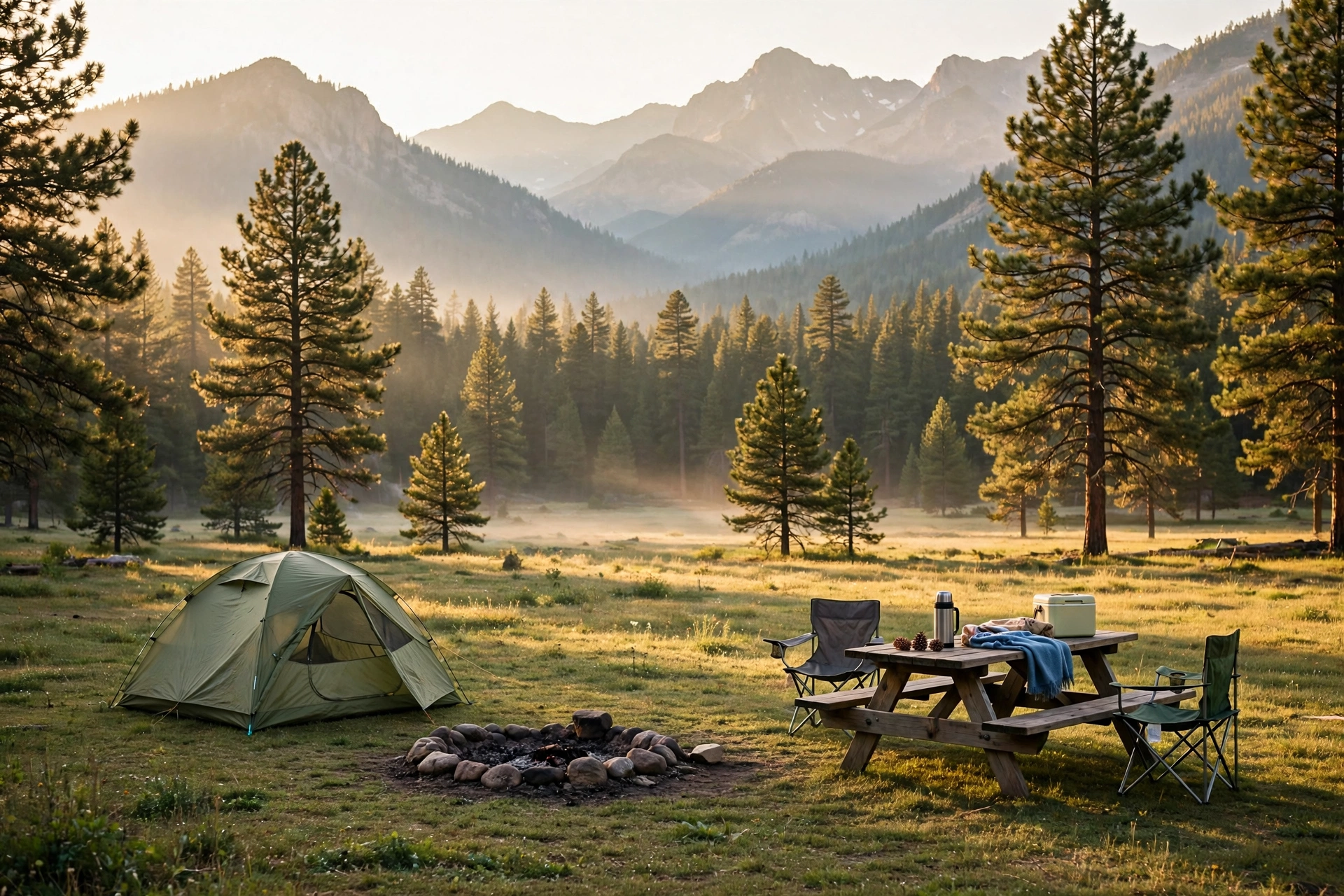
Before picking a place, it helps to know what to look for. A beginner-friendly campground usually has drive-up sites, so you can park right beside your tent instead of hiking your gear in. It has flush toilets and drinking water, a picnic table and a fire ring at every site, and a ranger station or camp host within easy reach. Reservable sites are a big plus: knowing your exact site is waiting for you removes the biggest first-trip worry. Proximity to a small town matters too, in case you forget something or the weather turns.
1. Yosemite National Park, California
Yosemite Valley is one of the most forgiving places to start. Upper Pines Campground sits on the valley floor, a short walk from shuttle stops, restrooms, and drinking water, with granite walls and waterfalls all around you. Days can be spent on flat, easy valley trails, and evenings around the fire ring. Sites are reservable through Recreation.gov and they go quickly, so book as early as the reservation window allows. Spring and fall bring thinner crowds and cooler air than the peak summer months.
2. Great Smoky Mountains National Park, Tennessee
Elkmont and Cades Cove are the classic first-timer campgrounds in the most visited national park in the country. Both have restrooms, drinking water, and sites you can reserve in advance, plus gentle riverside trails and historic cabins to explore without any serious hiking. Wildlife is part of the experience here, so store all food and scented items properly and follow the park’s bear-safety rules. Late spring and early fall are the sweetest seasons, with mild weather and fewer crowds.
3. Acadia National Park, Maine
Blackwoods Campground puts you minutes from Bar Harbor and the rocky Maine coast, with the ocean on one side and forested mountains on the other. Sites are reservable, restrooms and water are on site, and the park’s carriage roads offer flat, car-free walking and cycling that suits every fitness level. Summer days stay pleasantly cool compared with most of the country, and the nearby town means a hot meal is never far away if your camp cooking does not go to plan.
4. Grand Canyon National Park, Arizona
Mather Campground on the South Rim is open all year and is one of the easiest ways to experience the Grand Canyon properly. You can reserve a site in advance, walk to shuttle buses that run along the rim, and watch the sunset from a viewpoint instead of a parking lot. The South Rim sits at about 7,000 feet, so bring layers even in summer and drink more water than you think you need. If you are driving in from the west, you can easily combine the visit with one of the best road trips in the American Southwest, which passes several other parks worth a night or two.
5. Yellowstone National Park, Wyoming
Madison Campground, near the park’s west entrance, is a strong first choice in Yellowstone: reservable sites, flush toilets, and a central location between the geyser basins and the wildlife-rich valleys. You will see more in three days here than in a week almost anywhere else, from Old Faithful to herds of bison grazing beside the road. Keep the required distance from all wildlife, never approach animals for a photo, and check the park’s current conditions before you go, since road closures and weather can change plans quickly.
6. Shenandoah National Park, Virginia
Big Meadows Campground, right on Skyline Drive, is the easiest national-park camping on the East Coast. It is within a few hours’ drive of Washington, D.C., and several other cities, has reservable sites with restrooms and water, and sits beside a lodge, a camp store, and miles of trails that range from short waterfall walks to longer ridge hikes. Fall is the star season here: the Blue Ridge turns red and gold, and the campground fills up, so reserve early. It is also one of the great places to visit in November in the USA if you want crisp air and quiet trails after the leaf-peeping crowds leave.
7. Olympic National Park, Washington
Kalaloch Campground sits on a bluff above the Pacific, and it is the rare campsite where you fall asleep to the sound of waves. Sites can be reserved in the peak season, and the campground has restrooms and drinking water. The beach below is perfect for long walks among driftwood, while the park’s rainforest valleys are a short drive inland. Pack a good rain jacket and a waterproof layer for your tent, even in summer: Olympic’s weather changes fast, and being dry is what separates a good first trip from a miserable one.
8. Rocky Mountain National Park, Colorado
Moraine Park Campground gives first-timers the full Rocky Mountain experience without a difficult approach: reservable sites, restrooms, and elk grazing in the meadow at dawn. Summer is the main season, and mornings are the best time for wildlife and short hikes before afternoon thunderstorms build. Take the altitude seriously — the campground sits high, so drink plenty of water, go easy on your first day, and bring warm layers for cold nights. Colorado is one of the best places to visit for a first mountain trip, and this campground is a gentle way into it.
9. Assateague Island National Seashore, Maryland
Assateague is camping with a twist: wild horses roam the dunes and the beach is steps from your tent. The Maryland state park side of the island has reservable sites with restrooms and showers, which makes it far more comfortable for beginners than the more primitive federal side. Bring strong insect repellent in summer, secure your food from the horses, and check the forecast for coastal storms. For East Coast families who want beach camping without a long drive, it is hard to beat.
10. Bahia Honda State Park, Florida
Bahia Honda, in the Florida Keys, is the warm-weather pick on this list: palm trees, clear shallow water, and campsites a short walk from one of the prettiest beaches in the state. Sites are reservable and the park has restrooms, showers, and drinking water. It books up months in advance in winter, which is the best season here, so plan ahead. Watch the weather during hurricane season, and remember that even winter nights can be warm enough for a tent without a heavy sleeping bag.
How to Book Your First Campsite
Most national park campgrounds are booked through Recreation.gov, while state parks use their own reservation systems. Popular campgrounds can sell out within minutes of their reservation window opening, so set a reminder and have a backup date or a second campground in mind. Always read the campground page on the National Park Service website before you go: it lists current closures, fire restrictions, and any alerts that could affect your trip. Check the cancellation policy too — many sites let you cancel for a small fee, which makes an early booking a low-risk decision.
What to Pack for Your First Camping Trip
Keep it simple and borrow what you can before buying. The essentials are a tent, a sleeping bag rated for the expected overnight low, a sleeping pad, a headlamp, a cooler with food and drinking water, a camp stove or a plan for the fire ring, warm layers, rain gear, sunscreen, insect repellent, and a basic first-aid kit. Pack a printed copy of your reservation confirmation and the campground’s phone number, since mobile signal is unreliable in many parks. A short checklist written before you leave stops the most common packing mistakes.
Mistakes First-Time Campers Should Avoid
The most common first-timer mistake is arriving after dark. Setting up a tent for the first time by headlamp is frustrating, so plan to arrive with at least two hours of daylight left. The second is overpacking: you will use half of what you bring, and a cluttered campsite is harder to manage. The third is ignoring fire rules — use only the established fire ring, keep fires small, and never leave one unattended. And never leave food out overnight or in your tent: in bear country it is dangerous, and everywhere else it invites raccoons and other visitors.
FAQ:
Do I need a reservation, or can I just show up?
For the campgrounds on this list, a reservation is strongly recommended. The most popular ones fill up months in advance, and arriving without one often means driving on to the next town. Some campgrounds do keep first-come, first-served sites, but treat those as a backup plan, not your main one.
What if it rains on my first trip?
Rain is normal, and a good rainfly and a tarp over your cooking area make it manageable. Keep your sleeping gear dry at all costs, bring a change of dry clothes in a sealed bag, and have a plan for a wet day, such as a nearby town, a visitor center, or a short drive to a viewpoint.
Is camping safe for kids?
Yes, with the same common sense you would use anywhere outdoors: pick a campground with facilities and other families nearby, teach children the campsite boundaries, keep food stored properly, and stay together on trails. Many first family trips work best as a single night close to home.
Can I camp without a car?
It is much harder for a first trip. The campgrounds on this list are all drive-up sites, which is part of what makes them beginner-friendly. If you do not drive, look for campgrounds served by park shuttles and public transport, and pack light enough to carry everything in one trip.
Final Thoughts
Your first camping trip does not need to be remote, rugged, or perfect. Pick one destination from this list, reserve a site with facilities, arrive before dark, and keep your gear simple. The parks above were chosen because they forgive beginner mistakes: help is nearby, the ground is flat, and the views do the hard work. Once you have one comfortable night under the stars behind you, the second trip — and the wilder places — will feel much closer.