1. Pike Place Market
Pike Place Market is one of Seattle’s most recognizable attractions and an excellent starting point for exploring downtown. The historic market brings together food vendors, independent shops, restaurants, artisans, flowers, fresh produce, and the famous fish market.
Give yourself enough time to wander beyond the main market entrance. You can explore different levels, browse locally made products, enjoy a meal, and walk toward the waterfront. The market is particularly convenient for travelers because several other downtown attractions are within walking distance.
If you are interested in exploring more destinations after Seattle, you can also check out our guide to places to visit in Seattle, Washington State.
2. Space Needle
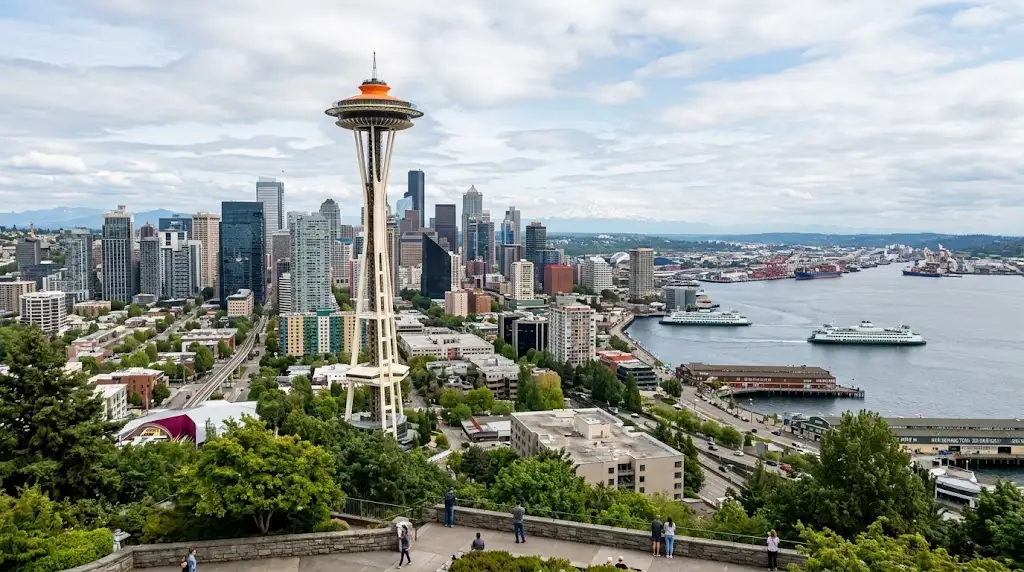
The Space Needle is perhaps the most recognizable symbol of Seattle. Built as the centerpiece of the 1962 World’s Fair, the landmark rises above Seattle Center and provides expansive views across downtown, Puget Sound, and the surrounding mountains.
The observation experience is especially appealing on a clear day, when visibility can extend toward the Cascade and Olympic mountain ranges. For photographers, the Space Needle also provides an opportunity to see Seattle’s skyline from above.
3. Chihuly Garden and Glass
Located beside the Space Needle, Chihuly Garden and Glass makes it easy to combine two major Seattle attractions in one visit. The museum showcases the work of glass artist Dale Chihuly through colorful indoor galleries and outdoor installations.
The Glasshouse is one of the highlights, while the garden creates an unusual contrast between large-scale glass artwork and living plants. It is a strong choice for travelers interested in art, design, photography, and creative installations.
4. Seattle Center
Seattle Center is more than just the home of the Space Needle. The 74-acre campus contains museums, performance venues, public spaces, food options, and several major attractions.
You can combine the Space Needle, Chihuly Garden and Glass, Museum of Pop Culture, and Pacific Science Center during the same outing. The Seattle Center Monorail also provides a convenient connection between the area and downtown.
5. Museum of Pop Culture
The Museum of Pop Culture, commonly called MoPOP, is a good choice for visitors who enjoy music, movies, science fiction, gaming, and contemporary popular culture. Its distinctive building, designed by architect Frank Gehry, is an attraction in its own right.
Inside, visitors can explore exhibitions covering different areas of popular culture and creative expression. Because MoPOP is located at Seattle Center, it can easily be included in a day of sightseeing around the Space Needle.
6. Seattle Waterfront
Seattle’s waterfront is one of the city’s most scenic areas. A walk along the waterfront provides views across Elliott Bay while connecting visitors with attractions, restaurants, piers, public spaces, and the Seattle Aquarium.
The redesigned waterfront has also made walking between several downtown attractions more enjoyable. From the Pike Place Market area, travelers can continue toward the waterfront and explore the piers at a relaxed pace.
The waterfront is also a useful starting point for exploring other places to visit on the West Coast.
7. Seattle Aquarium
Located on Pier 59, the Seattle Aquarium offers an introduction to marine life found in the Pacific Northwest and surrounding waters. It is particularly suitable for families and travelers who want an indoor attraction during cooler or rainy weather.
Because the aquarium is located on the waterfront, you can combine it with a walking tour of the piers, nearby restaurants, Pike Place Market, and other downtown attractions.
8. Discovery Park
Discovery Park provides a completely different experience from downtown Seattle. At 560 acres, it is Seattle’s largest park and includes forests, meadows, trails, beaches, sea cliffs, and views across Puget Sound.
The park is a good option when you want to add nature and open space to a city itinerary. Walking through the park can also provide a different perspective on the landscape surrounding Seattle.
If you enjoy natural destinations, our guide to natural places to visit in Las Vegas offers another example of combining urban travel with outdoor scenery.
9. Kerry Park
Kerry Park is one of Seattle’s most popular viewpoints for skyline photography. Located in the Queen Anne neighborhood, the park offers a classic view of downtown Seattle, the Space Needle, Elliott Bay, and, when conditions are clear, Mount Rainier.
Sunset and clear mornings can provide particularly attractive conditions for photography. Since the park is relatively small, it works best as a short stop rather than a full-day attraction.
10. Museum of Flight
The Museum of Flight is a worthwhile destination for aviation and space enthusiasts. Its collection includes historic aircraft and exhibits covering the development of flight and aerospace technology.
Because it is located away from the main downtown sightseeing zone, consider allowing additional travel time when adding the museum to your itinerary. It can be especially appealing to families with children who are interested in airplanes, space, and engineering.
11. Pioneer Square
Pioneer Square is Seattle’s historic first neighborhood and offers a different atmosphere from the modern downtown core. Brick buildings, historic architecture, galleries, restaurants, and walking tours make the district useful for travelers interested in the city’s past.
One of the area’s best-known experiences is exploring Seattle’s underground history. Walking tours can provide context about the city’s early development and the rebuilding that followed the Great Seattle Fire of 1889.
12. Seattle Great Wheel
The Seattle Great Wheel stands along the waterfront at Pier 57 and provides elevated views over Elliott Bay and the Seattle skyline. It can be a fun addition to a waterfront itinerary, especially for families and visitors looking for a short attraction between meals or other sightseeing stops.
Its location also makes it convenient to combine with Pike Place Market and other nearby waterfront attractions.
13. Volunteer Park
Volunteer Park on Capitol Hill offers green space, walking paths, gardens, and cultural attractions away from the busiest downtown streets. The park is also known for the Black Sun sculpture by Isamu Noguchi and its connection to the Asian Art Museum.
It is a useful stop for travelers who want to experience one of Seattle’s neighborhoods rather than spending the entire trip around the major tourist landmarks.
14. Smith Tower
Smith Tower is a historic Seattle landmark with an observation experience overlooking the city. The building dates back to the early twentieth century and offers a different architectural and historical perspective compared with the modern Space Needle.
Its downtown location makes it easy to include with Pioneer Square, the waterfront, and other central attractions.
15. Seattle Art Museum
The Seattle Art Museum is a natural choice for visitors interested in visual arts and cultural experiences. Its downtown location also makes it convenient to combine with Pike Place Market and the waterfront.
Travelers with more time can explore Seattle’s wider arts and museum scene, including institutions around Seattle Center and the University of Washington area.
Best Places to Visit in Seattle WA by Travel Style
Best for First-Time Visitors
First-time visitors can focus on Pike Place Market, the Space Needle, Chihuly Garden and Glass, Seattle Center, and the waterfront. These attractions provide a strong introduction to Seattle’s landmarks, food, culture, and scenery.
Best for Families
Families may enjoy the Seattle Aquarium, Museum of Pop Culture, Pacific Science Center, Space Needle, and Discovery Park. Combining indoor attractions with outdoor stops can also make the itinerary more flexible when Seattle’s weather changes.
Best for Nature Lovers
Discovery Park, Kerry Park, Volunteer Park, and the waterfront are good choices for adding scenery to a city-focused trip. Travelers planning a broader Pacific Northwest itinerary can also look beyond Seattle toward Washington and Oregon.
For more regional inspiration, explore our guide to places to visit in Oregon and Washington.
Best for Photography
Kerry Park is one of the most recognizable viewpoints, while the Space Needle, waterfront, Pike Place Market, Seattle Center, and Chihuly Garden and Glass provide additional opportunities for city, architectural, and lifestyle photography.
How Many Days Do You Need in Seattle?
A two- or three-day trip can cover many of Seattle’s major attractions without requiring an overly rushed schedule. With one day, prioritize Pike Place Market, the waterfront, Seattle Center, and the Space Needle. With two or three days, you can add Discovery Park, Pioneer Square, the Museum of Flight, Volunteer Park, and additional museums.
Travelers staying longer can also use Seattle as a starting point for exploring other destinations in Washington and the wider Pacific Northwest.
When Is the Best Time to Visit Seattle?
The ideal time depends on the type of trip you want. Summer generally provides longer daylight hours and more opportunities for outdoor sightseeing, while other seasons can offer a quieter city experience and different scenery.
If you are planning a broader summer trip around the United States, you can also explore our guide to the best places to visit in the US in summer. For travelers considering cooler destinations, our guide to places to visit in the Northeast in winter may also help with itinerary planning.
Tips for Planning a Seattle Trip
- Group nearby attractions: Combine Pike Place Market, the waterfront, and downtown attractions during the same outing.
- Allow time for Seattle Center: Space Needle, Chihuly Garden and Glass, and MoPOP can easily fill several hours.
- Check the weather: Clear conditions can make a major difference for mountain and skyline views.
- Include outdoor time: Discovery Park and Kerry Park add scenery to a museum- and attraction-heavy itinerary.
- Use public transportation where practical: Several central attractions are close together, and the Monorail connects Seattle Center with downtown.
- Plan around your interests: Seattle offers museums, markets, architecture, nature, food, sports, and waterfront experiences, so you do not need to visit every attraction.
More Travel Inspiration
If Seattle is part of a larger U.S. trip, you can continue planning with our guides to the top places to visit in the US, good places to visit in New York, and the best places to visit in San Diego.
For travelers interested in western U.S. destinations, our guides to unique places to visit in Texas, popular places to visit in Texas, places to visit in Honolulu, and places to visit in Utah from Las Vegas can help you build a broader itinerary.
Final Thoughts
The best places to visit in Seattle WA combine the city’s famous landmarks with its waterfront, green spaces, museums, historic districts, and neighborhood experiences. First-time visitors will likely want to see Pike Place Market and the Space Needle, while returning travelers can explore Discovery Park, Pioneer Square, Volunteer Park, and Seattle’s museums in greater depth.
The biggest advantage of a Seattle trip is the variety available within a relatively compact urban area. You can start the morning at a historic market, spend the afternoon exploring museums or viewpoints, and finish the day beside Elliott Bay. With thoughtful planning, Seattle can work equally well for a short city break or as the starting point for a wider Pacific Northwest adventure.