You stand on a rocky point where the Atlantic crashes against granite, a white lighthouse rising behind you against a hard blue sky. An hour later, you are walking a UNESCO-listed waterfront lined with brightly painted wooden buildings. By evening, you are eating fresh lobster in a small fishing village while a fiddle plays next door. That is Nova Scotia in a day — Canada’s maritime heart, where Celtic history, coastal scenery, and small-town warmth come together on one peninsula. This guide covers the places that make Nova Scotia worth the trip, how to get around, when to visit, and what to eat while you are there.
1. Halifax: The Harbour City
Start in Halifax, the provincial capital and the easiest place to land. The waterfront boardwalk stretches for kilometers along one of the world’s largest natural harbours, lined with patios, shops, and the Historic Properties warehouses. Climb Citadel Hill, the star-shaped fortress that has guarded the city since 1749, for the best panoramic view in town. The Maritime Museum of the Atlantic tells the city’s seafaring story — including its connection to the Titanic — with the care it deserves. Halifax also makes a practical base: the most restaurants, the best transit, and day-trip access to Peggy’s Cove, Lunenburg, and the Annapolis Valley.
2. Peggy’s Cove: The Postcard Lighthouse
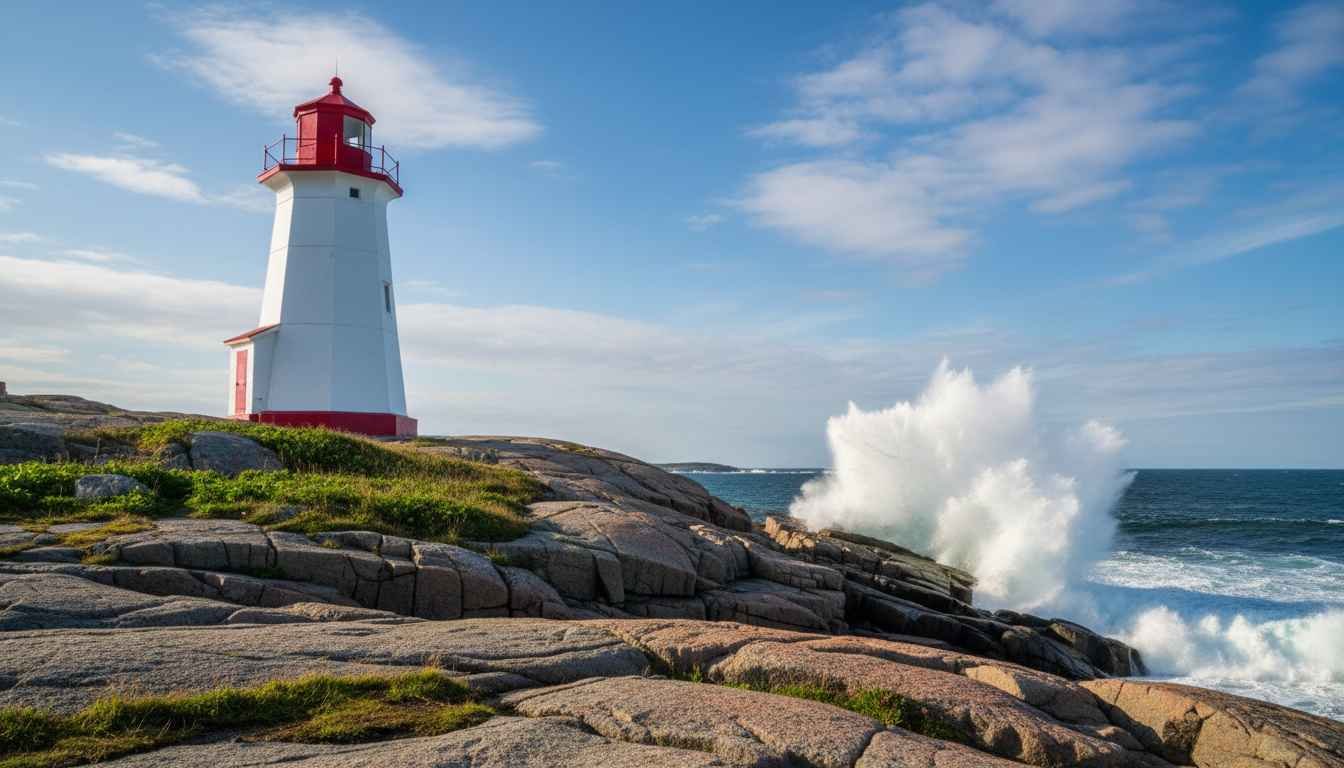
Just 45 minutes from Halifax, Peggy’s Cove is Nova Scotia’s most photographed spot — and it earns it. The lighthouse stands on glacier-smoothed granite rocks at the edge of the open Atlantic, with working fishing sheds and a tiny village behind it. Arrive early or late in the day to avoid tour-bus crowds, stay on the marked paths (the surf here is genuinely dangerous), and give the village an unhurried hour. Pair it with a slow drive along the Lighthouse Route for the full South Shore experience.
3. Lunenburg: A UNESCO Old Town
Lunenburg’s waterfront is a UNESCO World Heritage site, and walking it explains why: narrow streets climb from the harbour past some of the best-preserved 18th- and 19th-century British colonial architecture in North America, much of it painted in bold, bright colours. Visit the Fisheries Museum of the Atlantic, watch boatbuilders at work, and look out over the harbour where the famous Bluenose schooner once raced. Lunenburg’s galleries, distilleries, and seafood restaurants make it one of the best overnight stops on the South Shore.
4. Cape Breton Island and the Cabot Trail
The Cabot Trail is the drive people fly to Nova Scotia for. This 300-kilometre loop around Cape Breton Island’s northern tip threads through Cape Breton Highlands National Park, climbing over headlands with the ocean hundreds of metres below. Plan three to five days: hike the Skyline Trail at sunset (moose sightings are common), stop in the Acadian fishing villages of Chéticamp and Ingonish, and detour into the fiddle-music kitchens of the Margaree Valley. Drive it counterclockwise from Baddeck for the ocean-side lane, and take your time — this is a road that rewards every pullout.
5. Fortress of Louisbourg
On Cape Breton’s eastern shore, the Fortress of Louisbourg is North America’s largest historical reconstruction: a fortified 18th-century French town brought back to life, with costumed interpreters, working bakeries, and cannons that still fire. Give it a full day — the scale surprises most visitors. It sits about an hour from Sydney, Cape Breton’s largest city.
6. The Bay of Fundy: Walk on the Ocean Floor
Nova Scotia’s Fundy shore hosts the highest tides on Earth, and they turn sightseeing into an adventure. At low tide you can walk on the ocean floor among towering sea stacks and red cliffs at spots like Burntcoat Head Park; six hours later the same spot sits under metres of water. Cape d’Or’s basalt cliffs are the other highlight, and the tidal bore — a wave rushing upriver against the current — is worth timing your visit around. Check the tide schedule before you go; it is the single most important piece of planning on this coast.
7. Annapolis Valley: Wine Country and Orchard Roads
Turn inland and Nova Scotia softens into rolling farmland. The Annapolis Valley is the province’s wine country, with vineyards on the slopes producing notable whites and the sparkling wines the region is becoming known for. Spring blossom season and fall harvest are the sweet spots. Pair a winery route with historic Annapolis Royal — home to one of North America’s oldest European settlements — and the Grand-Pré National Historic Site, which honours the Acadian story.
8. Kejimkujik National Park: Wilderness and Dark Skies
In the province’s interior, Kejimkujik (locals call it “Keji”) protects ancient hemlock forests, canoe-route lakes, and Mi’kmaq petroglyphs carrying thousands of years of Indigenous history. It is also a designated Dark Sky Preserve — on a clear night the Milky Way rivals anywhere in eastern North America. Camp, canoe, or hike the Mersey River trail.
When to Visit Nova Scotia
Late June through September is peak season: warm days, full services, and every tour running. July and August are the warmest but also the busiest and most expensive. September into early October is the local favourite — warm ocean water, thinner crowds, fall colour in the Highlands, and harvest season in the Valley. Spring (May–June) brings wildflowers and lower prices but cooler, unpredictable weather. Winter is harsh and many seasonal businesses close; if winter travel is your thing, winter destinations in New York make a more reliable cold-season trip, while the places to visit in the Northeast in winter offer an easier seasonal alternative closer to home.
Getting Around
A rental car is nearly essential — Nova Scotia’s highlights are spread across a province the size of a small country, and public transit outside Halifax is thin. The main highways are good, but the best parts (the Cabot Trail, the Fundy shore, the Lighthouse Route) are slow, winding, and unmissable, so build in extra driving time. Cell service fades in the Highlands and along the Fundy coast, so download offline maps. If you are continuing your coastal travels from here, the top places to visit in Ireland offer a similar mix of dramatic shoreline, small towns, and warm hospitality on the other side of the Atlantic.
What to Eat
Nova Scotia is one of Canada’s great seafood provinces, and lobster season is the headline — lobster rolls, whole boiled lobster, and lobster poutine appear on menus from Halifax to tiny shore-road shacks. Digby scallops, fried on the Digby waterfront or in Valley restaurants, are the other signature dish. Add donair (Halifax’s official food), fresh oysters, and wild blueberries. Farmers’ markets in Halifax, Wolfville, and Lunenburg are excellent places to taste the province in one stop.
Final Thoughts
Nova Scotia rewards travelers who slow down. The province is small enough to cross in a day but rich enough to fill two weeks, and its best moments — a sunset over the Cabot Trail, low tide at Burntcoat Head, a ceilidh in a Cape Breton kitchen — happen on island time. Build your itinerary around the coast and let the sea set the pace.
FAQ:
How many days do you need in Nova Scotia?
Plan 7 to 10 days to see the highlights comfortably: 2 days in Halifax and the South Shore, 3 to 4 days on Cape Breton and the Cabot Trail, and a couple of days for the Fundy shore or Annapolis Valley. A week works if you skip one region.
What is the best time to visit Nova Scotia?
July through September offers the warmest weather and full services, but late September to early October is the sweet spot — warm water, fewer crowds, and fall colour. Spring is quieter and cheaper, while winter sees most seasonal businesses closed.
Is the Cabot Trail difficult to drive?
It is demanding but very doable: steep grades and switchbacks in places, so take it slowly and let faster drivers pass. Drive counterclockwise so you travel the ocean-side lane, allow three to five days, and avoid it in severe winter weather.
Can you walk on the Bay of Fundy ocean floor?
Yes — at low tide, places like Burntcoat Head Park let you walk among sea stacks on the seabed. Always check the tide schedule in advance and return well before the tide turns, as the water rises fast and far.