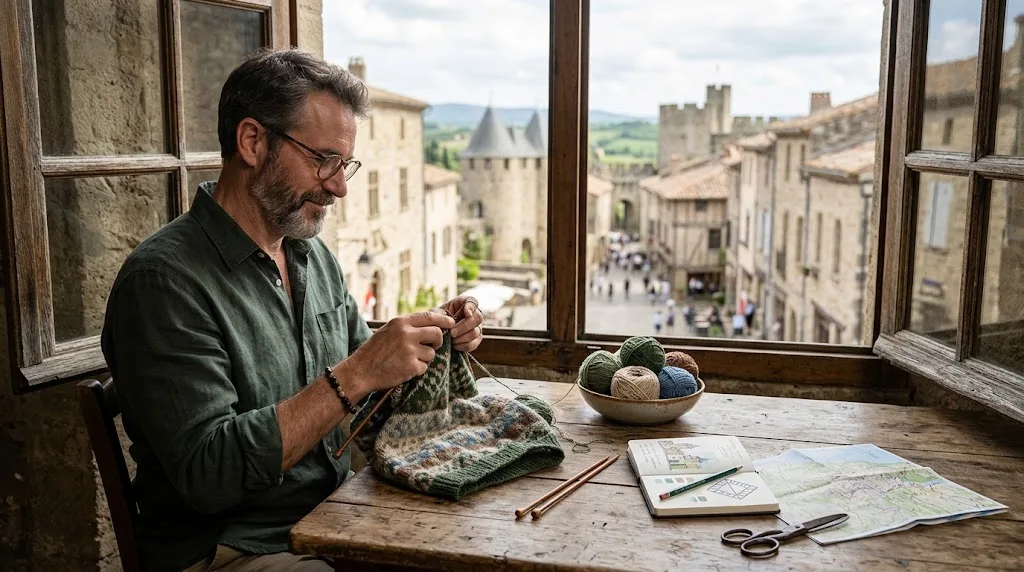
The idea combines two creative pursuits: exploring the world and making textile art. A mountain landscape might inspire a palette of earthy greens and cool blues, while a historic town could influence a pattern of geometric shapes, stone-like textures or architectural lines. The result is a wearable record of travel, with each design connecting a physical place to a creative interpretation.
Travel-inspired knitting also highlights how people can engage with destinations more thoughtfully. Instead of simply collecting photographs, a traveler can observe local materials, traditional crafts, regional color palettes and the details that make a place distinctive. The process offers an opportunity to learn about culture while developing an individual artistic style.
How Travel Inspires Sweater Designs
Every destination offers its own visual language. Natural scenery, buildings, local crafts, weather and everyday life can all influence the colors, textures and patterns used in a knitted garment. A successful travel-inspired sweater does not need to reproduce a landscape literally. It can translate the feeling of a place into a combination of yarn, stitch patterns and carefully chosen colors.
1. Landscapes and natural colors
Mountains, forests, coastlines and open countryside provide a natural starting point for textile design. A forest might suggest deep green, brown and muted gold yarns. A coastal destination could inspire pale sand, sea blue and grey tones, while a dramatic mountain scene might lead to layered shades that reflect changing light and elevation.
Travelers looking for landscape inspiration can explore destinations such as the Black Forest, where wooded scenery and traditional towns offer a distinctive visual atmosphere. The goal is not to copy nature exactly but to identify the colors and textures that make the landscape memorable.
2. Architecture and geometric patterns
Historic buildings can influence knitted designs through repeated shapes, decorative borders, arches, rooflines and stonework. A row of windows may inspire a repeating motif, while the symmetry of a historic façade could become a balanced geometric pattern.
Places with distinctive architecture offer plenty of opportunities for observation. In Lisbon, for example, travelers can study the visual character of historic streets, tiled façades and varied building forms. Such details can be translated into original patterns without reproducing protected artwork or presenting a design as an authentic traditional motif when it is not.
3. Local crafts and textile traditions
Local craftsmanship can help a traveler understand how materials, techniques and design traditions develop in different places. Visiting craft markets, textile museums, artisan workshops and cultural exhibitions may reveal how communities use color, texture and repeated patterns in their work.
These encounters should be approached with curiosity and respect. When a design draws directly from a specific cultural tradition, it is important to learn its meaning, acknowledge its origin and avoid using sacred or community-specific symbols as decoration without understanding their context. Where possible, support local makers and learn from people who actively maintain the craft.
European Destinations That Can Inspire Travel Knitting
Europe offers a wide variety of landscapes, architectural styles and regional identities. A traveler can move from coastal scenery to mountain villages, historic city centres and countryside communities, finding different sources of inspiration at every stop.
Italy: Color, buildings and regional character
Italy offers many different visual settings, from historic urban architecture to coastal towns and rural landscapes. A knitting project inspired by an Italian journey could use warm terracotta, cream, olive green or deep blue to reflect the traveler’s own observations.
Exploring places to visit in Italy can provide ideas for a collection of designs, with each sweater representing a different region or memory rather than treating the country as having one uniform style.
Croatia: Coastal tones and historic streets
Croatia’s coastal scenery, old towns and varied landscapes can inspire combinations of sea blue, pale stone, white and warm sunset colors. A designer might translate the rhythm of a harbour or the outline of a historic street into an abstract knitted motif.
Travelers researching the best places to visit in Croatia can use destination photography as a starting point for their own color studies, while ensuring that the final design reflects their personal interpretation.
Portugal: Tiles, streets and coastal light
Portugal can inspire designs through its historic streets, coastal views and decorative architectural details. Repeated shapes, contrasting colors and patterns observed in buildings may suggest interesting stitch arrangements.
For more destination ideas, explore places to visit in Portugal for first-time visitors. A traveler can record visual details in a sketchbook and later develop an original design based on the overall atmosphere of a place.
Greece: Islands, stonework and sea colors
Greek islands and historic destinations can inspire a palette of blue, white, sandy beige and earthy stone. Instead of copying a specific motif, a knitter could use contrasting bands or simple repeating shapes to evoke the coastline, buildings and light experienced during a trip.
Our guide to historic and scenic places on Rhodes Island offers an example of how travel planning can lead to closer observation of heritage sites and coastal scenery.
Belgium and the Netherlands: Seasonal color palettes
Travel during different seasons can change the colors and textures a visitor notices. Autumn streets may suggest rust, gold and brown, while winter city scenes can inspire grey, cream, navy and muted green. The same destination may therefore inspire very different garments at different times of year.
Seasonal travel guides such as places to visit in Belgium in autumn and the Netherlands in winter can help travelers think about the atmosphere and seasonal details they might record during a visit.
North American Journeys: From Coastlines to Wide Open Landscapes
North America offers a wide range of scenery, including forests, lakes, coastlines, mountains and large urban environments. For a traveler who knits, the contrast between these settings can lead to very different projects.
A coastal journey might inspire broad stripes that suggest the horizon, while a forest visit could lead to textured stitches and layered greens. A city break might focus on architectural repetition, while a national park visit could inspire a more subtle blend of natural colors.
Florida, for example, offers beaches, wetlands, historic districts and tropical vegetation. A traveler could use these environments to create a light-colored summer sweater or a design based on the contrast between water, sand and palm-lined landscapes. Our guide to the best place to visit in Florida provides ideas for exploring the state’s different environments.
Travelers interested in broader American landscapes can also browse the best places to visit in the United States in summer. Observing how light, vegetation and architecture change between regions can help create a collection of sweaters with distinct visual identities.
Asian Journeys: Patterns, Materials and Cultural Observation
Travel in Asia can introduce visitors to different architectural forms, textiles, craft traditions, markets and landscapes. These experiences can inspire a personal design process, but cultural observation should involve more than collecting attractive patterns.
Traditional designs may carry meanings connected to a community’s history, beliefs or identity. Before adapting a recognizable motif, travelers should learn about its background, identify whether its use is appropriate and give credit where due. Supporting local craftspeople is one way to deepen the experience beyond visual inspiration.
Food, markets and everyday public spaces can also become part of the traveler’s memory. For example, a visit to Mumbai may leave an impression through its street life, colors, architecture and food culture. Our guide to the best food places to visit in Mumbai offers a starting point for exploring one aspect of the city’s local character.
How a Traveler Can Turn a Journey into a Knitting Project
Turning travel memories into a finished sweater takes observation, planning and experimentation. A simple process can help connect the destination to the final garment without making the design overly complicated.
Step 1: Record details during the visit
Take notes about colors, textures, architecture, landscapes and memorable moments. Photographs can help preserve details, but a few written observations often make the memory more personal. Record the location and context of each reference so that its meaning is not lost after the trip.
Step 2: Create a small color palette
Choose three to five colors that represent the atmosphere of the destination. These might come from a landscape photograph, a building, a market or the changing light during the day. A limited palette can make a sweater cohesive and easier to plan.
Step 3: Experiment with stitch patterns
Test simple stripes, textured stitches, geometric repeats or colorwork swatches before starting the full garment. The aim is to translate an impression into a wearable design rather than reproduce every detail of a photograph.
Step 4: Choose suitable yarn and construction
Consider the climate in which the sweater will be worn, the weight of the yarn and the amount of detail in the design. A lighter garment may suit a mild climate, while a warmer yarn can be more practical for cold-weather travel memories. Always check the yarn’s care instructions and make a gauge swatch before committing to the full project.
Step 5: Give the finished sweater a story
Keep a short note about the destination, the inspiration and the design choices behind the garment. If the sweater is part of a larger collection, a travel journal can record how each project differs from the last. This makes the collection more meaningful without requiring every design to include a literal image of the destination.
Respectful Cultural Inspiration: What to Keep in Mind
Travel-inspired art can celebrate cultural diversity when it is created with care. A thoughtful approach distinguishes between a personal response to a place and the direct use of a community’s established cultural symbols.
- Learn the context: Research the history and meaning of a pattern before using it.
- Credit the source: Acknowledge artisans, traditions or references that directly inform a design.
- Support local makers: Buy locally made textiles or participate in workshops where appropriate.
- Avoid misleading claims: Do not describe an original design as an authentic traditional pattern unless that claim is accurate.
- Ask when uncertain: Some motifs may be restricted, sacred or closely connected to community identity.
- Keep a record: Notes and photographs can help preserve the context behind the inspiration.
This approach helps ensure that a creative travel project remains a form of appreciation rather than reducing a culture to a decorative theme.
Why Travel-Inspired Sweaters Can Be Meaningful Souvenirs
Traditional souvenirs often remind people of a destination through an object, image or logo. A sweater inspired by a journey can be more personal because the traveler takes part in making it. The choice of yarn, the time spent knitting and the decisions behind the design all become part of the memory.
Each garment can also represent a particular moment: a walk through a historic town, a quiet afternoon by the sea or a visit to a craft workshop. When the sweater is worn later, it can prompt the wearer to recall the experience and share the story behind it.
A collection can grow over time, with different garments representing different journeys. Some may use colors inspired by natural scenery, while others focus on architecture, seasonal changes or the atmosphere of a city. The variety gives the collection a visual narrative without requiring every sweater to follow the same formula.
Planning Travel Around Creative Interests
Travelers interested in art, textiles and local craftsmanship can plan trips around more than major attractions. Markets, museums, historic neighborhoods, cultural events and artisan workshops may provide a deeper understanding of a destination.
It helps to leave time for unplanned observation rather than filling every day with activities. A slower itinerary can make it easier to notice details, speak with local makers where appropriate and keep a journal of ideas for future projects.
For inspiration beyond familiar tourist routes, explore less-touristy places in Europe or discover unique places to visit around the world. The most useful destination is not necessarily the most famous one; it may be a place whose landscapes, craft traditions or everyday details connect with a traveler’s creative interests.
Frequently Asked Questions
Why does a traveler knit sweaters inspired by places he visits?
Travel-inspired knitting can preserve memories of landscapes, architecture, local crafts and cultural experiences. A sweater becomes a wearable reminder of a journey and a way to translate observations into a creative object.
How can a place influence a knitted sweater?
A destination can influence color choices, stitch patterns, textures and overall design. Natural landscapes may inspire earthy colors, while buildings or decorative details may suggest geometric patterns and repeated shapes.
Do travel-inspired sweaters have to show a recognizable landmark?
No. A design can reflect the atmosphere of a place through color, texture or an abstract pattern. Often, a subtle reference is more versatile to wear than a literal picture of a landmark.
How can knitters research local craft traditions responsibly?
Learn about the history and meaning of the craft, visit reputable museums or workshops, support local artisans and credit the sources of inspiration. Avoid using cultural or sacred symbols without understanding whether their adaptation is appropriate.
What should a traveler record for a future knitting project?
Useful notes include the destination, date, colors observed, landscape details, architectural features, local materials and the story behind a memorable moment. Photographs and sketches can provide additional references.
Can travel-inspired knitting become a collection?
Yes. A series of sweaters can represent different destinations, seasons or travel experiences. Keeping each garment connected to a specific story can make the collection feel cohesive while allowing every design to remain distinct.
Final Thoughts
A traveler who knits sweaters inspired by the places he visits offers an imaginative example of how travel and creativity can complement each other. Landscapes, architecture, local crafts and cultural encounters can all influence the colors and textures of a garment, turning travel memories into something that can be worn and revisited.
The most meaningful designs begin with careful observation and respect for the places and people that provide inspiration. By recording details, learning about local traditions and developing original patterns, travelers can create garments that tell personal stories without losing sight of cultural context.
Whether the inspiration comes from a European city, a North American coastline or an Asian craft market, the central idea remains the same: travel can shape creative work long after the journey ends. A thoughtfully made sweater can become both a practical piece of clothing and a lasting reminder of the places that made an impression.