If you are planning a wider European trip around the same period, our guide to the best places to visit in Europe can help you build a broader itinerary.
What Is Holy Week?
Holy Week is the Christian period leading from Palm Sunday through Easter Sunday. It commemorates important events associated with the final days of the life, death, and resurrection of Jesus Christ.
The exact dates change every year because Easter is calculated according to the Christian liturgical calendar. This means travelers should always check the dates, procession schedules, church services, transportation arrangements, and attraction opening hours for the specific year they plan to visit.
In 2026, Holy Week runs from Palm Sunday on March 29 through Easter Sunday on April 5. The Vatican’s official 2026 calendar includes Palm Sunday, Holy Thursday, Good Friday, the Easter Vigil, and Easter Sunday celebrations during this period.
Best Places to Visit During Holy Week
These destinations stand out for their combination of religious traditions, historic importance, cultural atmosphere, and travel appeal.
1. Seville, Spain
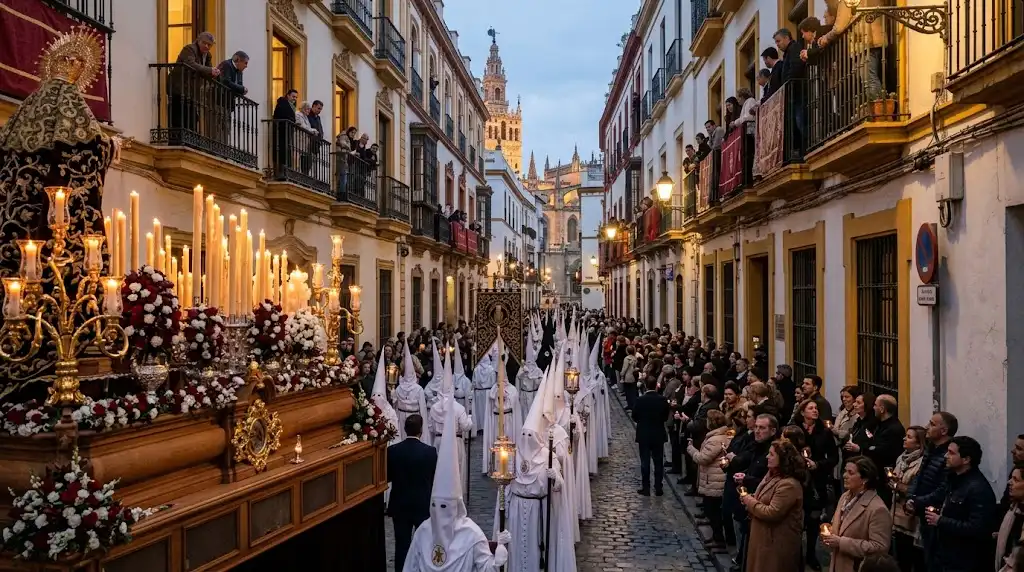
Seville is one of the best places to visit during Holy Week if you want to experience large-scale processions, historic brotherhoods, religious art, music, and centuries-old traditions in the streets.
Known locally as Semana Santa, Holy Week transforms Seville’s historic center. Brotherhoods carry elaborately decorated religious floats through the streets while crowds gather along the routes. Processions take place throughout the week, creating an atmosphere that combines religious devotion, art, music, architecture, and local culture.
One of the most important moments is La Madrugá, the overnight period between Holy Thursday and Good Friday. Several highly revered processions travel through the city during the night and into the early morning.
Seville’s official tourism information describes Holy Week as an event combining religion, art, history, and popular culture, while Spain’s national tourism portal recognizes it as a Festival of International Tourist Interest.
Beyond the celebrations, visitors can explore Seville’s Cathedral, Giralda, Royal Alcázar, Santa Cruz neighborhood, Plaza de España, and Triana.
Best for: Processions, religious art, architecture, photography, culture, and first-time Holy Week travelers.
2. Rome and Vatican City, Italy
If your priority is experiencing Holy Week at the center of Catholic Christianity, Rome and Vatican City are difficult to overlook.
Holy Week in Rome combines major religious ceremonies with thousands of years of history, monumental architecture, museums, churches, and pilgrimage traditions.
Good Friday is particularly significant. The Vatican’s official 2026 schedule includes the Celebration of the Passion of the Lord and the Way of the Cross at the Colosseum. Easter Sunday includes Mass in St. Peter’s Square followed by the traditional Urbi et Orbi blessing.
Rome also gives travelers the opportunity to visit major religious landmarks such as St. Peter’s Basilica, St. John Lateran, St. Mary Major, and the Basilica of the Holy Cross in Jerusalem.
For travelers extending their trip through Italy, Rome can also serve as a starting point for exploring other historic destinations.
Best for: Pilgrimage, Catholic history, major ceremonies, architecture, museums, and historic sightseeing.
3. Jerusalem, Israel
For travelers seeking a destination directly connected to the biblical events commemorated during Holy Week, Jerusalem offers an experience unlike almost anywhere else.
The Old City contains some of Christianity’s most important religious sites, including the Church of the Holy Sepulchre. Holy Week traditions can include Palm Sunday observances, religious services, processions, and other ceremonies connected with the Passion and Resurrection narratives.
Jerusalem is particularly significant for travelers who want to combine religious observance with a deeper exploration of sacred history.
Because conditions and access arrangements in Jerusalem can change, travelers should check current government travel advisories and official local information before planning a Holy Week visit.
Best for: Pilgrimage, biblical history, religious heritage, sacred sites, and spiritual travel.
4. Antigua Guatemala, Guatemala
Antigua Guatemala offers one of the world’s most visually distinctive Holy Week experiences.
The city’s Semana Santa celebrations are famous for enormous religious processions and elaborate alfombras, or colorful carpets created from materials such as dyed sawdust, flowers, leaves, and other natural elements.
These temporary artworks cover sections of the historic streets before processions pass over them. The result is a striking combination of religious devotion, local craftsmanship, community participation, and colonial architecture.
Antigua is particularly attractive for travelers who want a Holy Week experience that is deeply rooted in local culture rather than centered only on formal church ceremonies.
The celebration has also received UNESCO recognition as Intangible Cultural Heritage.
Best for: Cultural travel, photography, processions, traditional art, colonial architecture, and immersive experiences.
5. Málaga, Spain
Málaga provides another opportunity to experience Spain’s famous Semana Santa traditions while enjoying a Mediterranean city.
Holy Week processions move through the city accompanied by religious imagery, music, brotherhoods, and large crowds. The city’s coastal location also makes it attractive to travelers who want to combine religious celebrations with sightseeing and time by the Mediterranean.
Compared with Seville, Málaga offers a different atmosphere and provides an excellent option for travelers building a wider Andalusia itinerary.
Best for: Spanish traditions, Mediterranean travel, processions, food, and city breaks.
6. Braga, Portugal
Braga is one of Portugal’s most historically significant religious destinations and can be an excellent choice for a quieter Holy Week trip.
The city has centuries of religious heritage, historic churches, and traditions that make it particularly interesting for travelers interested in Christian history and Portuguese culture.
Braga can also be combined with Porto and other northern Portuguese destinations.
If Portugal is already part of your travel plans, our guide to places to visit in Portugal for first timers provides additional destination ideas.
Best for: Religious heritage, Portuguese culture, historic churches, and slower-paced travel.
7. Valladolid, Spain
Valladolid offers a more solemn and traditional Spanish Holy Week experience.
The city’s processions are strongly associated with religious sculpture and historic brotherhoods. Visitors interested in Spanish religious art can appreciate the detailed imagery carried through the streets during the celebrations.
Valladolid is a good alternative for travelers who want to experience Semana Santa away from the larger international crowds of Seville.
Best for: Religious sculpture, history, traditional processions, and cultural travel.
8. Florence, Italy
Florence is another appealing option for travelers who want to combine Easter traditions with Renaissance art and historic architecture.
The city is already one of Italy’s great cultural destinations, and visiting around Easter can add seasonal religious traditions to an itinerary filled with museums, churches, galleries, palaces, and historic squares.
Travelers can combine Florence with Rome for a broader Italian Easter journey.
Best for: Art, architecture, museums, history, food, and cultural sightseeing.
9. Dubrovnik, Croatia
Dubrovnik is worth considering if you want to combine Easter traditions with a scenic Adriatic destination.
The city’s historic Old Town, stone architecture, churches, sea views, and compact layout make it an attractive spring destination. Holy Week can add a more reflective cultural dimension to a visit that would otherwise focus primarily on sightseeing.
For travelers interested in exploring Croatia more broadly, see our guide to the best places to visit in Croatia.
Best for: Historic architecture, Adriatic scenery, culture, couples, and spring travel.
10. Athens, Greece
Athens offers a different Easter tradition because Greek Orthodox Holy Week follows its own liturgical calendar, which does not always coincide with Western Easter.
Travelers can combine religious traditions with visits to the Acropolis, ancient ruins, historic neighborhoods, museums, and traditional Greek food.
This makes Athens particularly attractive for visitors who want their Easter trip to include both religious culture and ancient history.
If you are considering a wider Mediterranean itinerary, you can also explore our guide to places to visit in Rhodes Island, Greece.
Best for: Greek Orthodox traditions, ancient history, food, museums, and Mediterranean travel.
Seville vs. Rome: Which Is Better for Holy Week?
Both destinations offer exceptional experiences, but they appeal to different types of travelers.
| Feature | Seville | Rome |
|---|---|---|
| Processions | Exceptional | Major religious ceremonies and processions |
| Religious atmosphere | Very strong | Extremely strong |
| Street celebrations | Outstanding | More ceremony-focused |
| Religious art | Exceptional | Exceptional |
| Historic attractions | Excellent | World-class |
| Best for | Semana Santa atmosphere | Vatican and Catholic traditions |
Choose Seville if you want Holy Week to dominate your travel experience. Choose Rome if you want major Catholic ceremonies combined with museums, ancient history, and world-famous landmarks.
Best Place to Visit During Holy Week for Different Travelers
- Best overall: Seville, Spain
- Best for Catholic pilgrimage: Rome and Vatican City
- Best for biblical history: Jerusalem
- Best for colorful cultural traditions: Antigua Guatemala
- Best for Spanish Holy Week alternatives: Málaga or Valladolid
- Best for Portuguese religious heritage: Braga
- Best for art and Easter in Italy: Florence
- Best for Mediterranean spring travel: Dubrovnik
- Best for Greek Orthodox Easter: Athens
What Makes Seville the Best Overall Choice?
Seville stands out because Holy Week is not simply an event taking place in a few churches. It becomes part of the entire city.
Processions move through historic neighborhoods, brotherhoods prepare throughout the year, traditional music fills the streets, and religious artwork becomes part of the urban landscape.
The city’s official tourism authority describes the celebration as a combination of religion, art, history, and popular culture. Spain’s national tourism organization also recognizes Seville’s Holy Week as a Festival of International Tourist Interest.
The experience is especially powerful when combined with Seville’s historic architecture and neighborhoods.
How to Plan a Holy Week Trip
Book Accommodation Early
Popular Holy Week destinations can become exceptionally busy. Seville, Rome, and Antigua Guatemala can experience substantial visitor demand, so accommodation should be arranged well in advance.
Check the Annual Schedule
Procession routes and service schedules can change from one year to another. Check official tourism and religious organization websites shortly before your trip.
Choose Your Location Carefully
Staying close to the historic center can make it easier to reach processions and churches on foot. However, central locations can also be noisier and more expensive during major celebrations.
Wear Comfortable Shoes
Holy Week sightseeing often involves considerable walking and standing. Comfortable footwear is essential, especially in cities where processions occupy streets for long periods.
Respect Religious Traditions
Holy Week celebrations are not simply tourist spectacles. They are deeply meaningful religious events for local communities. Dress respectfully when entering churches, follow instructions around processions, and avoid disrupting ceremonies for photographs.
Check Transportation Changes
Large processions can affect roads, public transportation, and pedestrian routes. Allow extra time when moving between attractions.
When Is Holy Week?
Holy Week changes dates every year because Easter Sunday changes according to the Christian calendar.
For example, in 2026, Palm Sunday falls on March 29 and Easter Sunday falls on April 5. The Vatican’s official schedule lists Good Friday on April 3, the Easter Vigil on April 4, and Easter Sunday on April 5.
In Seville, Holy Week in 2027 is scheduled for March 21 through March 28, demonstrating why travelers should verify the dates for their specific year before booking flights and accommodation.
Tips for Experiencing Holy Week Like a Respectful Traveler
- Research the meaning behind the ceremonies before attending.
- Follow crowd-control instructions and procession barriers.
- Dress modestly when entering churches and religious sites.
- Do not block processions while taking photographs.
- Ask permission before photographing people in sensitive religious moments.
- Book accommodation and transportation early in popular destinations.
- Expect road closures and temporary changes to attraction schedules.
- Keep noise levels low during solemn ceremonies.
- Leave enough time to walk between crowded areas.
- Remember that Holy Week is a religious celebration first and a tourism experience second.
Other European Destinations to Add to Your Trip
If you are traveling through Europe during spring, Holy Week can become part of a larger multi-country itinerary.
Travelers interested in historic cities can explore places to visit near Vienna by train, while those looking for scenic European destinations can consider Puglia.
You can also explore Belgium, Ireland, and other destinations featured throughout NexoraPulse’s European travel guides.
For travelers deciding where to go in Europe overall, our guides on the best places in Europe to visit and where to visit in Europe can help you compare different options.
Frequently Asked Questions
What is the best place to visit during Holy Week?
Seville, Spain, is one of the best overall choices because its Holy Week combines large processions, religious artwork, music, historic brotherhoods, and centuries-old traditions throughout the city.
Is Rome or Seville better for Holy Week?
Seville is generally better for travelers who want immersive street processions and Spanish Semana Santa traditions. Rome is better for travelers who prioritize Vatican ceremonies, Catholic pilgrimage, and major religious events.
What is the best place for Easter religious tourism?
Rome and Vatican City are among the strongest choices for Catholic religious tourism, while Jerusalem is particularly significant for travelers interested in the geographic setting of the biblical Easter story.
Is Seville worth visiting during Holy Week?
Yes. Holy Week is one of Seville’s most important annual celebrations and transforms the historic center with daily processions, music, religious imagery, and large crowds.
Is Antigua Guatemala good for Holy Week?
Yes. Antigua Guatemala is famous for elaborate processions and colorful alfombras created along the streets. It is especially appealing to travelers interested in the intersection of religion, local culture, art, and historic architecture.
Should I book Holy Week travel early?
Yes. Major destinations can become very busy during Holy Week. Booking accommodation and transportation early gives you more choices and can help avoid significantly higher last-minute prices.
Does Holy Week happen on the same dates every year?
No. Holy Week changes dates every year because Easter Sunday changes according to the Christian liturgical calendar.
Final Thoughts
The best place to visit during Holy Week depends on whether you want spectacular street processions, major religious ceremonies, biblical history, cultural traditions, or a combination of all four.
Seville is arguably the strongest all-around choice for an immersive Holy Week experience. Its Semana Santa combines religious devotion, elaborate processions, music, historic art, and the atmosphere of a city completely transformed by the celebration.
Rome is ideal for travelers seeking Vatican ceremonies and Catholic heritage, while Jerusalem offers unmatched historical and spiritual significance. Antigua Guatemala stands out for its colorful alfombras and community traditions, while destinations such as Málaga, Braga, Valladolid, Florence, Dubrovnik, and Athens provide alternative experiences.
Whichever destination you choose, plan ahead, verify the year’s official schedules, respect local religious traditions, and leave enough time to experience the destination beyond the processions themselves.