Cross the Thames away from the West End crowds and London changes character. South London is not one place but a string of them — maritime Greenwich, the food-and-theatre bustle of the South Bank, the global kitchens of Brixton, and the quiet greenery of Dulwich, Richmond and Kew. If your London itinerary has been all about Oxford Street and the Tower, here is the other half of the city, and it deserves at least two full days.
Greenwich: Where Time Begins
Start where the world measures time. The Royal Observatory sits atop the hill in Greenwich Park, and straddling the brass line of the Prime Meridian — one foot in the eastern hemisphere, one in the western — is the single most photographed moment in south London. The park itself rewards the climb with sweeping views across the Thames to the Isle of Dogs and the City, especially in the soft light of early morning.
Downhill, the National Maritime Museum covers Britain’s seafaring story through charts, ship models and the uniform Admiral Nelson wore at Trafalgar. Entry is free, the galleries are airy and modern, and families can easily spend a half day here. A few minutes away, the covered Greenwich Market mixes street food stalls with crafts and antiques — grab a hot arepa or a Bao and eat it on the riverside path with the Old Royal Naval College in front of you, one of London’s great architectural set pieces.
Tower Bridge, Borough Market and the South Bank
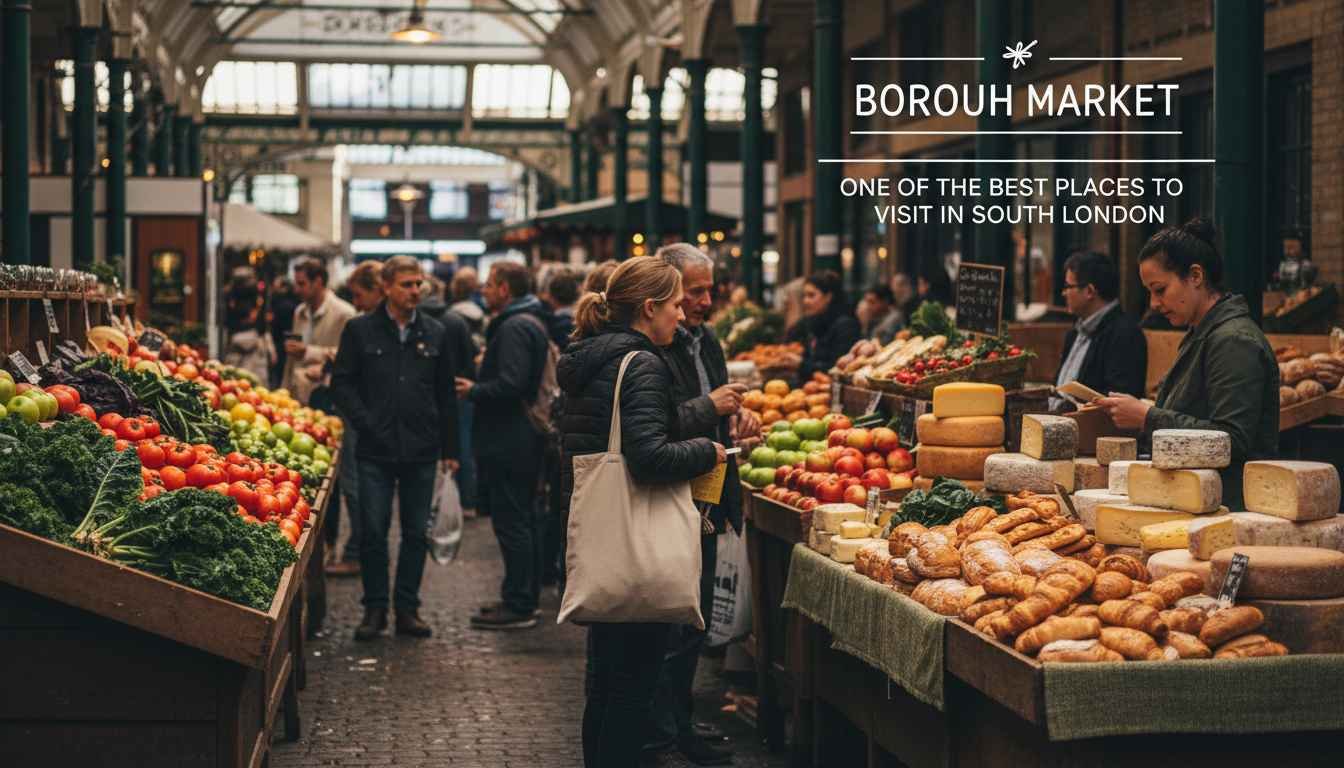
The stretch of river from Tower Bridge west to Waterloo is South London at its most walkable. Tower Bridge is the iconic one — book the high-level walkway if you want to stand on glass floors above the traffic. Cross it on foot and you arrive at Borough Market, London’s most famous food market, where cheesemongers, raclette stalls and spice merchants have traded for centuries. Come hungry and come early on weekdays to beat the lunch rush.
Follow the Thames path west and you pass Tate Modern, the turbine-hall art powerhouse that turned a former power station into one of the world’s most-visited modern art museums — free entry, with the top-floor viewing terrace worth the lift ride alone. Beyond it, the South Bank stretches past the London Eye, the Royal Festival Hall and Shakespeare’s Globe, a riverside promenade that is equal parts public square, skate park and festival site. In summer, food trucks and pop-up bars line the embankment from late afternoon.
Kew Gardens and Richmond: Green London
For a completely different pace, head southwest to the Royal Botanic Gardens, Kew. The Victorian glasshouses — the Palm House and the Temperate House — are marvels of engineering in their own right, and the Treetop Walkway puts you eye to eye with the canopy. Spring blossom and autumn colour make these the best visiting seasons, and the gardens can genuinely fill a full day without ever feeling repetitive.
Neighbouring Richmond pairs one of London’s most beautiful riverside walks with Richmond Park, the largest of the royal parks, where red and fallow deer roam free across open grassland. Walk down Richmond Hill for the protected view of the Thames that painters have captured for two centuries, then find a pub terrace by the water for the evening.
Brixton: Food and Market Culture
No South London guide is honest without Brixton. This is the capital’s global kitchen — Caribbean, African, Latin American and South Asian food shoulder to shoulder in the covered arcades of Brixton Village and Market Row, where old shopfronts now host natural-wine bars, Ethiopian coffee houses and jerk-grill counters. Brixton Market’s Electric Avenue, named for being one of London’s first electrically lit streets, is still a working produce market by day and a food destination by night. If music is your thing, the Brixton Academy hosts touring acts in a grand art-deco hall.
Dulwich Picture Gallery and Crystal Palace Park
Two quieter gems reward the curious. The Dulwich Picture Gallery is the world’s first purpose-built public art gallery, designed by John Soane, and its collection of Old Masters — Rembrandt, Gainsborough, Rubens — hangs in an intimate, light-filled space that is a world away from the crowds of central London. Nearby Dulwich Park is one of the city’s loveliest for a long walk or a picnic.
Further south, Crystal Palace Park hosts the famous Victorian dinosaur sculptures — life-size Victorian visions of prehistoric creatures set around a lake — alongside a boating lake, a maze and the national sports centre. It is a little off the standard tourist map, which is exactly why locals love it.
Getting Around South London
South London is well served once you know the lines. The Northern, Jubilee, Victoria and Bakerloo lines reach Brixton, Greenwich, Waterloo and the South Bank respectively; London Bridge is the great interchange for the southeast. South of the river, many journeys are faster by National Rail from London Bridge, Victoria or Waterloo than by Tube — the DLR whisks you to Greenwich and Cutty Sark from Bank in minutes. The river bus (Thames Clippers) between the Tower, Greenwich and the South Bank is the prettiest commute in London, and the Overground’s Windrush line now links Clapham Junction, Peckham, Brixton and Crystal Palace. And if you are planning a bigger European itinerary after London, consider pairing the capital with the best places to visit in Istanbul or the best places to visit in Croatia — two city breaks that contrast beautifully with London’s pace. Rail fans should also note the easy day trips to places to visit near Vienna by train, which show how naturally a London stay can extend into wider European travel.
Best Times to Visit and Food Notes
Spring and early autumn are the sweet spot: long days, gardens in bloom or turning, and the South Bank’s outdoor season in full swing. Summer is festive but crowded at Borough Market and Tate Modern; winter is quieter, with Greenwich’s Christmas market and the South Bank’s winter festival worth planning around.
For food, build days around markets rather than restaurants: breakfast at Borough, lunch in Brixton Village, dinner on the South Bank. South London’s pubs are a destination in themselves — the riverside pubs of Wapping-free Rotherhithe and the craft-beer bars of Bermondsey’s Beer Mile are easy add-ons to any riverside walk.
FAQ:
How many days do I need for South London? Two full days covers the highlights comfortably: one for Greenwich, Tower Bridge, Borough Market and the South Bank; one for Kew or Richmond plus Brixton or Dulwich. A third day lets you slow down and add Crystal Palace Park.
Is South London safe for tourists? The areas in this guide are well-visited, well-lit and well-policed, with the usual big-city rules applying: keep valuables close on busy streets and on public transport, especially at markets and around Waterloo at night.
Which is better, Greenwich or the South Bank? They do different things. Greenwich is the history-and-views day — observatory, maritime museum, park and market. The South Bank is the walkable arts-and-food day — Tate Modern, the promenade, Borough Market and the Eye. Most visitors will want both.
Do I need to book tickets in advance? For paid attractions like the Royal Observatory and the Tower Bridge walkway, booking ahead is strongly recommended in high season. Tate Modern, the National Maritime Museum and the South Bank promenade itself are free and need no booking.
Final Thoughts
South London rewards the traveler who slows down. It is the city of the Prime Meridian and the dinosaur park, of the world’s great food markets and its oldest public art gallery, all connected by riverside paths and an excellent transport web. Give it the time it deserves — north of the river will still be there when you get back.