Picture yourself on a ferry deck at golden hour, the minarets of the Old City silhouetted against an orange sky while seagulls trail the wake behind you. You are sailing between two continents — Europe on one side, Asia on the other — and that, in a single image, is what makes Istanbul unlike anywhere else you can travel. The best places to visit in Istanbul are not just sights to tick off; they are layers of Byzantine, Ottoman, and modern Turkish life stacked on top of each other, and every neighborhood rewards you for slowing down.
This guide covers the essential stops: the great monuments of Sultanahmet, the bazaars, the water, the viewpoints, and the neighborhoods where Istanbul’s everyday life plays out. Plan at least three full days — more if you want to linger — and wear comfortable shoes, because the city’s seven hills will test your calves.
The Historic Core: Sultanahmet
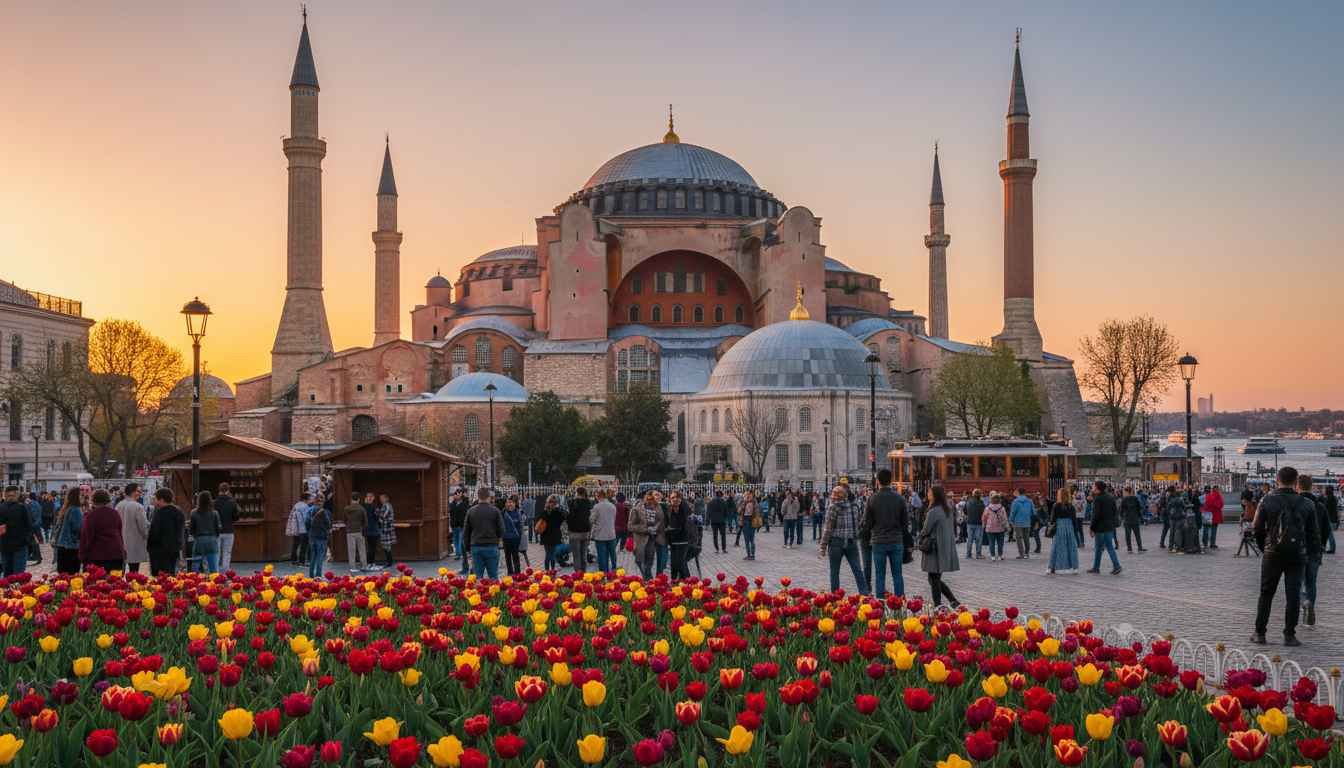
Start where Istanbul’s history is densest. Sultanahmet, the old city on the European side, holds the three heavyweight sights of any first visit. The Hagia Sophia is the one building that tells Istanbul’s entire story: built as a Byzantine cathedral in the sixth century, later an Ottoman mosque, then a museum, and since 2020 a functioning mosque again. Its vast dome still feels impossibly ambitious for something constructed nearly 1,500 years ago. Dress modestly and be prepared to remove your shoes in the prayer areas; as an active place of worship, it closes to tourists during prayer times.
Directly across the square, the Sultan Ahmed Mosque — better known as the Blue Mosque for the tens of thousands of blue Iznik tiles lining its interior — is the defining image of Istanbul’s skyline with its six minarets. Go early in the morning to see the light move across the tiles before the crowds build. Like the Hagia Sophia, it is an active mosque, so plan your visit between prayer times.
A short walk away, Topkapi Palace was the seat of Ottoman sultans for nearly four centuries. The sprawling complex — courtyards, pavilions, the imperial treasury, and the Harem quarters — gives you the clearest sense of how an empire actually ran its daily life. The terrace views over the Bosphorus alone are worth the visit. Allow two to three hours here; it is much bigger than it looks from the gate.
Beneath and Around the Old City: Basilica Cistern and the Grand Bazaar
Just steps from the Hagia Sophia, the Basilica Cistern descends into one of Istanbul’s most atmospheric spaces: a vast underground reservoir built by the Byzantines, its 336 marble columns reflected in shallow water under dramatic lighting. The two Medusa-head column bases — one upside down, one sideways, for reasons nobody has definitively explained — are the cistern’s famous oddity. It is compact, so visit in the morning or late afternoon to avoid the midday lines.
Then get lost on purpose in the Grand Bazaar, one of the oldest and largest covered markets in the world, with more than sixty streets and thousands of shops under its vaulted roofs. Even if you buy nothing, the carpet sellers, lantern shops, and goldsmiths’ lanes are a spectacle. Bargaining is expected and good-natured — start at roughly half the asking price and meet in the middle. Nearby, the smaller Spice Bazaar (Egyptian Bazaar) near Eminönü is the place for Turkish delight, saffron, teas, and dried fruits, with prices that tend to be friendlier than the Grand Bazaar’s.
Views of the City: Galata Tower and the Bosphorus
For the classic panorama, climb the Galata Tower, the medieval Genoese stone tower that has watched over the Golden Horn since the 1300s. The 360-degree view from the top balcony takes in the Old City, the Bosphorus, and the Asian shore in a single sweep. Go at sunset if you can get a timed entry slot; the light on the water is the city’s best free show. The streets at its base in Karaköy are full of cafes for the walk back down.
No visit is complete without getting out on the water. A Bosphorus cruise — whether a short sightseeing loop or the longer public ferry ride up to the mouth of the Black Sea — is the most relaxing way to understand the city’s geography, with Ottoman palaces, waterfront mansions (yalis), and fortresses sliding past on both banks. The public ferries from Eminönü are the budget-friendly way to do it and are used by commuters as much as tourists.
Neighborhoods Worth Wandering
Beyond the monuments, Istanbul’s character lives in its neighborhoods. Istiklal Street in Beyoğlu is the city’s great pedestrian avenue, running from Taksim Square down to Galata, lined with historic arcades, bookshops, and cafes — and the nostalgic red tram still rattles down its middle. Peel off into the side streets of Balat for colorful Ottoman-era houses, antique shops, and a slower pace that feels a world away from Sultanahmet’s crowds.
Cross to the Asian side for a different Istanbul. The ferry ride itself is part of the experience, and Kadıköy rewards you with a lively food market, meyhanes, and a local-nightlife scene that most tourists never see. Üsküdar, just across from the Old City, has waterfront promenades with the most photographed view of the Maiden’s Tower and the European skyline. If your schedule allows a full day, the Asian side is where the city starts to feel like home rather than a museum.
When to Plan Your Visit
Spring and autumn bring the mildest weather for walking the hills and sitting at waterfront cafes, with smaller crowds than the summer peak. Summer is hot and busy but has the longest days and the liveliest Bosphorus scene. If you are weighing Istanbul against other warm-weather options for a summer getaway, our roundup of the best places to visit in summer for international travel can help you compare. Winter is the quietest and cheapest season — the sights are just as impressive under a grey sky, and you will often have the cisterns and museums nearly to yourself.
Final Thoughts
Istanbul rewards travelers who mix the essential sights with unplanned wandering. See the Hagia Sophia and the Blue Mosque, cruise the Bosphorus, haggle in the Grand Bazaar — then give yourself an afternoon with no plan in Kadıköy or Balat and let the city surprise you. And because Istanbul sits at the meeting point of continents, it pairs naturally with wider travels: for travelers continuing across the continent, our guide to the best places to visit in Europe covers where to go next.
FAQs
How many days do you need in Istanbul?
Three full days cover the essential sights of Sultanahmet, the bazaars, a Bosphorus cruise, and one neighborhood wander. Four to five days let you add the Asian side and the Princes’ Islands without rushing.
Is Istanbul a walkable city?
Individual districts are very walkable, but the city is large and hilly. Use the tram, metro, and ferries between districts and save your walking energy for Sultanahmet, Beyoğlu, and the bazaar quarters.
Do you need a guide for the historic sites?
Not necessarily — the major sights are well signed and audio guides are available. A guide does add real value at Topkapi Palace and the Hagia Sophia, where the layered history is easy to miss on your own.