You know the scene. You are standing at the gate, your carry-on will not close, the zipper is straining, and the airline agent is eyeing your bag like it owes her money. The flight has not even started, and packing has already made the trip stressful. Most of that stress is avoidable: a carry-on is small on purpose, and it rewards a little planning. Here are the carry-on packing mistakes to avoid before your next trip, and what to do instead.
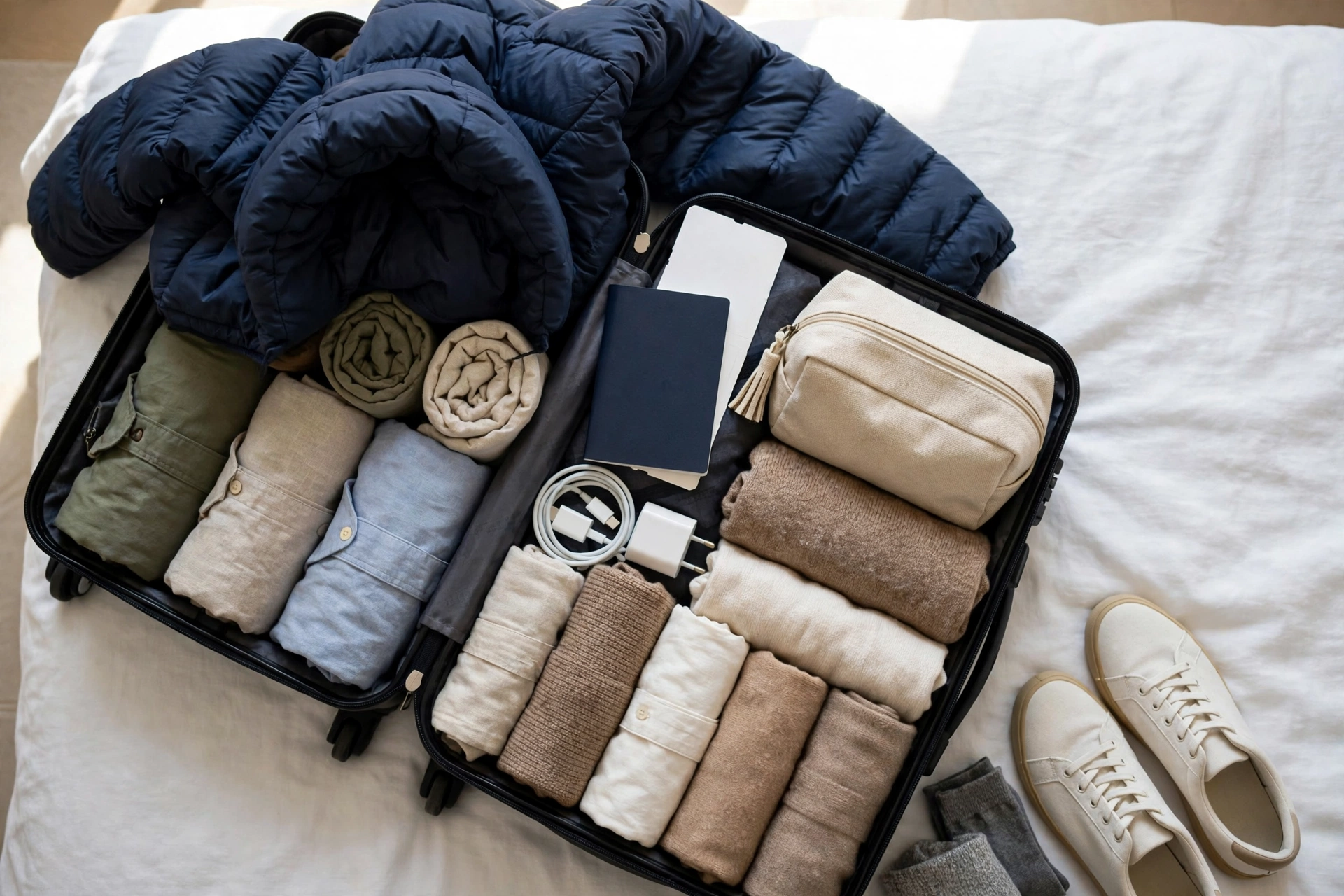
1. Overpacking: Bringing Everything “Just in Case”
The most common carry-on packing mistake is packing for every imaginary scenario. Three “just in case” outfits, two extra pairs of shoes, and a sweater for weather you will probably never meet — all in the same limited space. Every extra item makes the bag heavier, harder to lift into the overhead bin, and harder to search when you need something mid-flight.
Pack for the trip you actually booked, not the trip you might take. Check the forecast a day or two before you leave, then choose outfits that mix and match — two tops that work with the same trousers save a third of your clothing space. A good test is simple: lay out everything you plan to bring, then remove three items.
2. Ignoring Your Airline’s Carry-On Size and Weight Limits
Not all carry-ons are the same size, and neither are airline rules. A bag that fits perfectly on one carrier can be too large or too heavy on another, especially on budget and international flights. The result is a surprise gate-check fee, which often costs far more than checking the bag in advance would have.
Before you pack, check your airline’s size and weight limits and measure your bag, wheels and handles included, then weigh the packed bag on a bathroom scale. If you are close to the limit, wear your heaviest jacket and shoes on the plane instead of packing them. And when you are still planning the trip, finding cheap international flights is only half the job — the other half is knowing the baggage rules of the airline you book, so a low fare does not become a high fee at the gate.
3. Packing Liquids the Wrong Way
The liquids rule catches travelers every day. Bottles over the limit, loose toiletries rolling around the bag, shampoo leaking over your clothes — all the same mistake: treating liquids as an afterthought.
For flights departing the United States, the Transportation Security Administration’s 3-1-1 rule applies: each liquid must be in a container of 3.4 ounces (100 milliliters) or less, all containers must fit in one quart-sized clear bag, and each passenger gets one bag. Put that bag at the top of your carry-on so you can pull it out quickly at security, use travel-sized bottles, and tighten every cap. If you are unsure whether an item counts as a liquid, check the TSA’s What Can I Bring? list before you leave; rules differ in other countries, so check your departure airport’s rules too.
4. Burying Your Essentials at the Bottom of the Bag
Your passport, phone charger, headphones, medication, and a snack should never be buried under three days of clothes. The moment you need one — at security, at the gate, or in a cramped middle seat — you will be unpacking in public while a line forms behind you.
Pack in layers with access in mind: essentials in the top compartment or an outside pocket, clothes you will not need until arrival at the bottom, and travel documents in one small pouch you can grab without opening the whole bag. This small habit also matters for safety: if you are traveling alone, keeping your documents and phone within easy reach is one of the simplest solo travel safety tips for first-time travelers you can follow.
5. Leaving Valuables and Medication in Your Checked Bag
A carry-on exists for the things you cannot afford to lose. Jewelry, electronics, camera gear, prescription medication, and important documents belong with you in the cabin, not in a checked suitcase that could be delayed, damaged, or sent to the wrong city. Checked bags do go missing — and airlines only compensate up to a limit.
Keep medication in its original packaging in your carry-on, along with chargers, laptops, and anything you would be upset to replace. If you do check a bag, treat the carry-on as your insurance policy: pack enough to get through 24 hours if the checked bag does not arrive. For longer trips, it is also worth understanding what travel insurance for backpackers actually covers when luggage is delayed or lost.
6. Forgetting a Change of Clothes for Delays
Flights get delayed, connections get missed, luggage gets held up. If your carry-on holds only gadgets and snacks, a long delay leaves you in the same clothes you wore to the airport, with no way to freshen up.
Pack one full change of clothes in your carry-on — a fresh top, underwear, and socks at minimum — plus a toothbrush and a small deodorant. Rolled flat, it takes very little space, and it is the most appreciated item in your bag when plans go wrong.
7. Packing Shoes and Bulky Items Without a Plan
Shoes are the space killers of carry-on packing: two extra pairs can swallow a third of your bag, and a bulky jacket stuffed in loose takes up even more. The mistake is not bringing them — it is packing them without thinking about shape.
Wear your bulkiest shoes and heaviest jacket on the plane. Pack only one extra pair of shoes, stuff socks inside them, roll soft clothes instead of folding them, place heavier items near the wheels, and use packing cubes to keep categories separate.
8. Skipping a Packing List
Packing from memory is how chargers, adapters, and medication get left on the kitchen counter. You remember the big things — clothes, passport, tickets — and forget the small things that ruin a day when missing.
Write a packing list before you open the bag. Keep a simple reusable list on your phone, and check items off as they go in. Build it from your last trip: what you used, what you carried and never touched, and what you wished you had brought. After two or three trips, packing takes half the time.
9. Filling Every Inch and Leaving No Room for Souvenirs
A carry-on packed to the zipper on the way out leaves you nowhere to put anything on the way home. That souvenir, gift, or local snack gets squeezed in and wrinkles everything, or you pay to ship it, or you leave it behind.
Leave about a fifth of your bag empty when you depart. It costs you nothing and buys you flexibility for the return trip. If you plan to shop, pack a foldable tote bag — it weighs almost nothing and works as an extra personal item on the way home if the airline allows it.
A Smarter Carry-On Routine
You do not need a new bag or a complicated system. Check your airline’s limits, write a packing list, pack in layers with essentials on top, keep liquids in one clear bag, and leave a little space for the way home. Do that, and the bag stops being a source of stress.
FAQ:
What is the biggest carry-on packing mistake?
Overpacking. “Just in case” items push the bag over weight limits, bury essentials, and leave no room for souvenirs.
How many days of clothes fit in a carry-on?
Three to five days with mix-and-match outfits, rolled clothes, and the bulkiest items worn on the plane. For longer trips, do laundry once instead of packing for the full length.
Can I bring full-size toiletries in my carry-on?
No, on flights departing the United States. Liquids must be in containers of 3.4 ounces (100 milliliters) or less, all inside one quart-sized clear bag. Full-size bottles belong in checked luggage.
Should valuables go in a carry-on or checked bag?
Always in your carry-on. Electronics, jewelry, medication, and important documents should stay with you in the cabin.
Final Thoughts
A carry-on is a constraint, but it is a useful one. It forces you to decide what actually matters for the trip and to leave the rest behind. Pack light, pack in layers, keep your essentials close, and check the rules before you fly. The reward is simple: you walk off the plane with everything you need, no waiting at the carousel, and no extra fees.