You are standing on a station platform with a backpack at your feet, a ticket in your hand, and no one else to ask whether this is the right train. That small moment is what first solo travel feels like: exciting, a little uncertain, and completely yours. Solo travel does not require fearlessness. It requires a few good habits, planned before you leave and repeated while you are away. This guide covers how to choose a manageable first trip, protect your money and documents, stay aware on the street, and handle problems calmly if they come up.
Start With a Trip You Can Actually Manage
Your first solo trip should stretch you, not overwhelm you. A place where you can read the signs, find help in a language you understand, and get around without a complicated transfer is a sensible starting point. A short first trip teaches you how you handle navigation, meals alone, and unexpected changes, without the pressure of a long journey.
Choose a destination for the trip you want, not for the trip that looks most impressive. If you love walking, museums, and cafes, a walkable city will suit you better than a remote hiking base. If you would rather start closer to home, the best places to visit in November in the USA offer quieter streets and lower prices between peak seasons. If Japan is on your list, timing matters as much as place, so check the best time to visit Japan for cherry blossom season before you fix your dates.
Plan the Basics Before You Leave
Good safety starts at home. Check that your passport is valid for well beyond your return date, because some countries require several months of validity after arrival. Photograph or scan your passport, visa, insurance details, and booking confirmations, and store copies somewhere you can reach them without your main bag, such as a secure cloud folder. Leave a second set with someone you trust.
Share your itinerary with that person too: where you are staying each night, how you plan to travel between places, and roughly when you expect to check in. Read your travel insurance properly, not just buy it: check what it covers for medical care, trip interruption, and lost belongings, and note the emergency number before you fly.
Before departure, check official travel guidance for your destination, including the U.S. Department of State travel information pages and any local advice about areas to avoid, common scams, and emergency numbers.
Protect Your Money and Documents
Carry less than you think you need. Take one main payment card and a backup kept separately, plus a small amount of local cash for places that do not accept cards. Tell your bank you are traveling if it asks, so a legitimate payment is less likely to be blocked at the wrong moment.
Keep your passport, spare card, and most of your cash secure at your accommodation, and carry only what you need for the day. A crossbody bag worn in front, with zipped compartments, is harder to dip into than an open tote or a backpack pocket behind you. If a card is lost or stolen, freeze it through your banking app and use your backup.
Stay Aware Without Staying Anxious
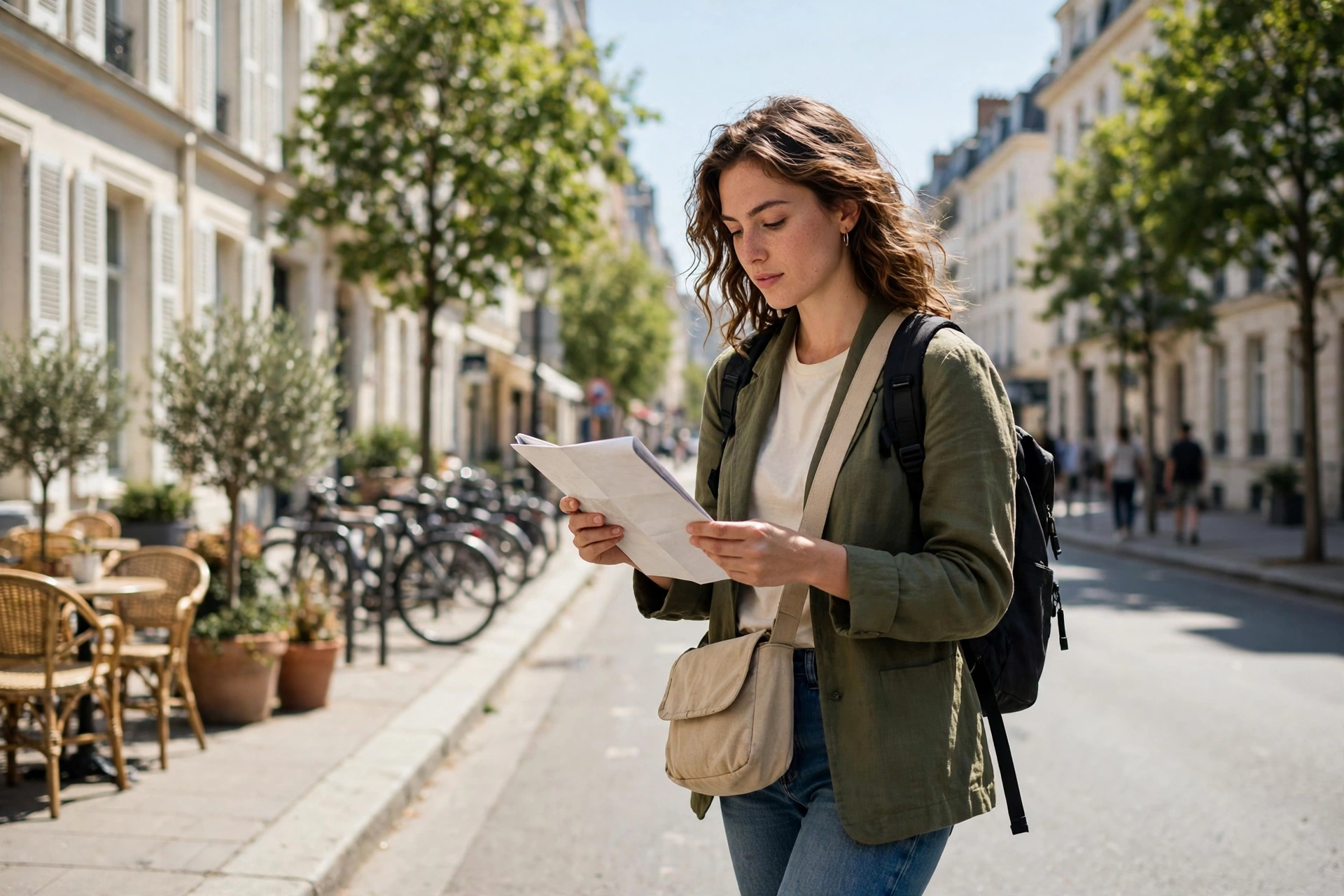
Awareness is a habit, not a state of alarm. Walk with purpose, even when you are unsure of the way. If you need to check a map, step into a shop or cafe rather than stopping in the middle of a busy pavement with your phone in full view.
Be polite but firm with strangers who are unusually persistent, especially anyone offering an unsolicited tour, a ride, or a deal that seems too good to be true. You do not owe anyone your time or your itinerary. Saying you are meeting friends nearby is a simple boundary, and you can walk away without an argument. At night, stick to lit, populated streets, and choose well-reviewed transport over an unmarked vehicle.
Alcohol deserves a special note: a drink with dinner is one thing, but drinking enough to lose track of your bag, route, or judgment is another. Keep your drink in sight, and plan how you will get back before you go out.
Book Flights and Stays That Keep You Flexible
Flexibility is a safety tool. When you compare fares, read how to find cheap international flights from the USA before you pay, so you are not locked into a fare that does not fit your plans.
For accommodation, location matters more than luxury. A well-reviewed place near public transport, with a staffed front desk or a responsive host, gives you someone to ask when plans change. On arrival, save the address offline and check how the locks and any safe work before you head out.
Pack and Dress for Low Attention
Packing light is also a safety choice. One bag you can carry comfortably up a flight of stairs, into a train, and across a cobbled street is easier to keep track of than two heavy cases.
Dress for the place you are visiting, not just for photographs. Flashy jewelry and expensive cameras worn openly draw attention in any city, and comfortable shoes matter more than style when you need to walk or change plans quickly. If local customs call for modest dress at religious sites or in certain neighborhoods, follow them: it shows respect and helps you blend in.
Stay Connected and Reachable
Your phone is your map, your translator, and your way to call for help, so protect its battery and its connection. Download offline maps for your destination before you leave, and save your accommodation address, local emergency numbers, and your embassy or consulate details where you can find them without a signal.
Set up your phone so a stranger cannot easily use it if it is taken: a strong passcode, automatic lock, and remote-find and remote-lock features switched on. Back up your photos regularly. On public Wi-Fi, avoid banking or entering passwords; use mobile data for sensitive tasks.
What to Do If Something Goes Wrong
Problems on a solo trip feel bigger because you face them alone, but most have a clear next step. If you feel followed, cross the street, enter a busy public place, and do not lead someone back to your accommodation. If your wallet is stolen, cancel your cards first, then report it to local police if you need a report for insurance, and contact your embassy if your passport is gone.
If you feel unwell, ask your accommodation for the nearest clinic or pharmacy, and call your insurer’s emergency line early, since they can direct you to approved care. Keep a note of any medication or allergy in your phone and on paper. Above all, give yourself permission to change the plan: cutting a day short or moving hotels is not failure. It is good judgment.
FAQ: Solo Travel Safety for First Time Travelers
Is solo travel safe for a first time traveler?
It can be, with the same care you would use in any unfamiliar city. Choosing a manageable destination, planning your transport and accommodation, and keeping valuables and documents secure cover most everyday risks. No destination is risk-free, so check current official guidance before you go.
Should I tell people I am traveling alone?
Tell someone you trust at home, and share your itinerary and check-in plan with them. With strangers, you do not need to announce that you are alone. A simple answer, such as saying friends are nearby, is enough.
What is the single most useful safety habit?
Staying aware of your surroundings and your belongings. Most solo travel problems come from distraction, not danger: a bag left open, a phone held loosely in a crowd, or a route followed without looking up. Small, repeated habits prevent most of them.
Final Thoughts
Solo travel rewards preparation more than courage. When your documents are copied, your money is split, your route is planned, and someone at home knows where you are, you are free to enjoy the part that makes traveling alone special: choosing your own pace, following your own curiosity, and discovering that you can handle a new place on your own terms. Start with a trip you can manage, keep your habits simple, and let confidence build one well-planned day at a time.