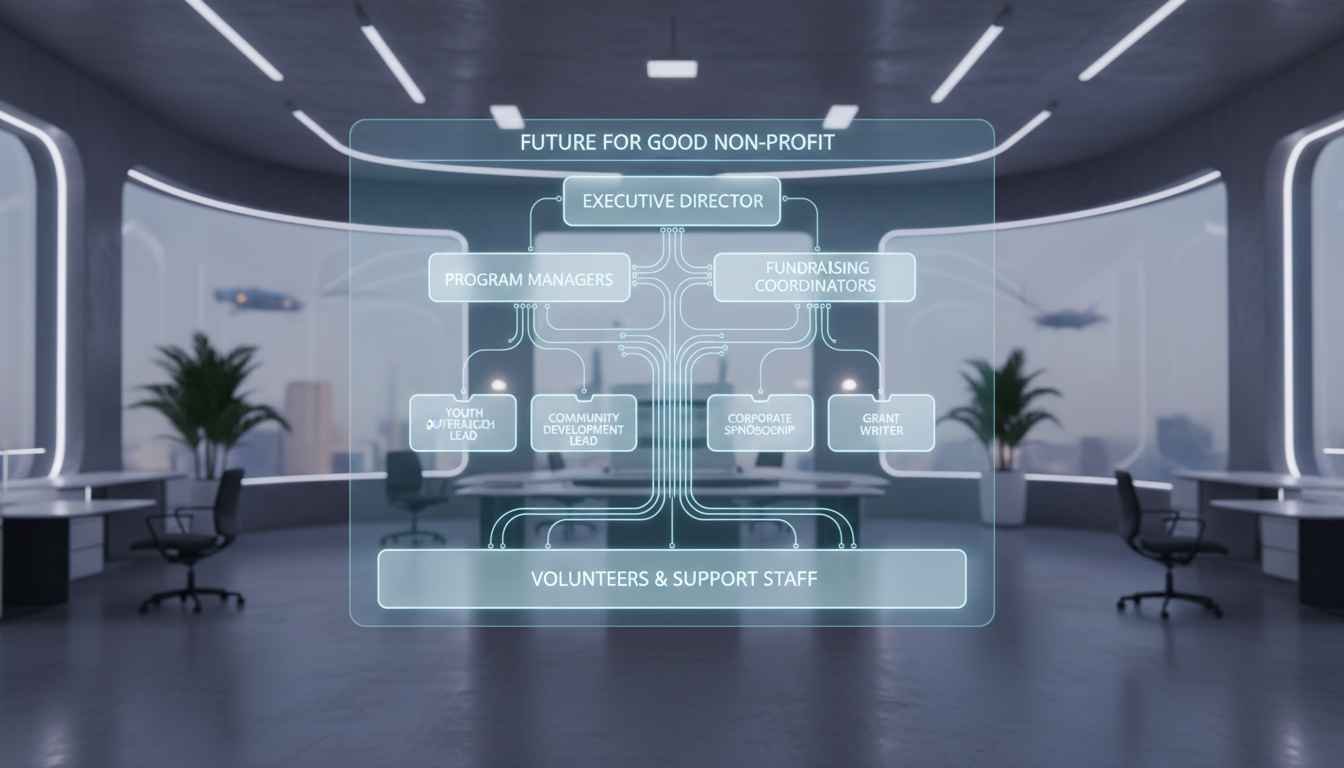
The screen flickers, neon lights reflecting off a glassy boardroom as holographic charts float midair, nodes pulsing with data. Each pulse represents a volunteer, a department, or a donor connection. The city outside glimmers with digital banners of social initiatives, each networked like neurons in a vast, living organism. This is not a sci-fi movie – it is a glimpse into the future of nonprofit management, where organizational charts are dynamic, interactive ecosystems rather than static diagrams on paper.
Understanding the organizational chart of non profit organization in this futuristic context is more than a structural exercise; it’s about visualizing influence, decision-making, and collaboration across multiple layers of your mission-driven enterprise. Imagine each board member, executive director, program manager, and volunteer represented as nodes in a constantly shifting network, dynamically adjusting based on priorities, campaigns, and donor engagement. At The Basilica of Saint Mary, this approach has revolutionized how departments coordinate, plan, and achieve shared goals.
Who is this for?
This guide is designed for nonprofit leaders who crave strategic clarity and futuristic insights. Executive directors, board members, and program coordinators will find value in understanding how hierarchical charts evolve into adaptive networks. Grant managers, development officers, and operations specialists will discover the importance of visualizing not only reporting lines but also influence patterns. Tech-savvy volunteers and consultants working with nonprofit infrastructure can also leverage this knowledge to implement more efficient workflow systems.
Breaking Down the Nonprofit Organizational Chart
The classic nonprofit structure typically starts with the Board of Directors at the top, guiding policy, vision, and financial oversight. Beneath them, the Executive Director orchestrates day-to-day operations, translating vision into actionable programs. Departments like Development, Operations, Marketing, and Volunteer Services branch out, each with specialized managers and staff. Volunteers, often the lifeblood of nonprofit activities, integrate horizontally across programs, contributing skill and time where needed.
In a futuristic model, this structure is augmented with technology. Interactive dashboards, AI-driven task allocation, and real-time reporting transform traditional roles into dynamic, data-informed positions. Each node in the organizational chart is not just a person or a title but a living entity reflecting activity, influence, and contribution levels. For example, a Development Coordinator’s impact on fundraising can be measured in donor engagement scores, while Volunteer Leads may have dashboards tracking hours, skills, and program integration.
The Marketing Funnel Perspective
Consider the nonprofit organizational chart as a marketing funnel. At the top, the Board and Executive Leadership generate awareness and establish credibility, much like brand recognition in consumer markets. Middle layers – program managers, communications officers, and volunteer coordinators – nurture engagement, maintaining relationships with donors, volunteers, and community partners. The bottom funnel, comprising field staff, volunteers, and support teams, executes programs, ensuring that strategic goals translate into real-world impact.
In today’s competitive job market, internships have become an essential stepping stone for students and recent graduates seeking to gain valuable experience and build their resumes. However, not all internships are created equal, and those offered by non profit organizations in nyc internships can provide unique opportunities for personal and professional development. Engaging with these organizations not only allows interns to contribute to meaningful causes but also helps them develop a diverse skill set that can be beneficial in any career path. This article delves into the advantages of pursuing internships in New York City’s vibrant non-profit sector, highlighting how these experiences can pave the way for future success while making a positive impact on the community. Through personal anecdotes and expert insights, we will explore why these internships are more than just a line on a resume—they are transformative experiences that shape the next generation of leaders.
Applying a marketing lens allows leaders to identify bottlenecks, optimize communication channels, and align operational efforts with strategic fundraising campaigns. This approach ensures every role, from executive to volunteer, contributes to the mission with measurable outcomes, driving efficiency, transparency, and donor trust.
Dynamic Roles and Technological Integration
Futuristic nonprofit charts emphasize cross-functional collaboration and adaptive roles. AI and workflow automation can predict volunteer availability, optimize program scheduling, and even suggest targeted donor communications. For instance, a Volunteer Engagement Specialist may receive real-time recommendations to deploy resources to high-impact projects, while Development Officers can leverage analytics to identify under-engaged donor segments.
This integration fosters accountability and streamlines reporting, creating a culture where every contributor understands the direct impact of their work. Platforms like Nonprofit Finance Fund demonstrate how technology can support transparency and fiscal responsibility, aligning perfectly with organizational charts designed for strategic clarity.
Who Should Avoid This? Potential Drawbacks
While advanced organizational charting offers immense value, some nonprofits may struggle with implementation. Smaller organizations with limited tech infrastructure or budget constraints might find sophisticated dashboards overwhelming. Similarly, organizations resistant to change may experience staff pushback, reducing engagement rather than improving efficiency. Understanding these limitations is crucial before investing heavily in a dynamic chart system. A measured approach ensures technology complements, rather than complicates, the mission.
Future-Proofing Your Nonprofit Structure
Nonprofits today face increasing pressure to demonstrate impact, efficiency, and transparency. A well-designed organizational chart becomes a strategic tool, highlighting leadership pathways, volunteer engagement, and program outcomes. By incorporating adaptive technologies, nonprofits can pivot rapidly in response to emerging community needs, donor trends, and operational challenges. The future of nonprofit management lies not in static hierarchy but in a living, breathing ecosystem where every connection is meaningful, every contribution measurable, and every strategy data-driven.
Envisioning the organizational chart as a living network transforms leadership from reactive oversight to proactive orchestration. Departments no longer operate in silos; they collaborate seamlessly across campaigns, funding initiatives, and volunteer mobilization. The impact is measurable, the workflow transparent, and the mission accelerated.
Conclusion
The organizational chart of non profit organization is evolving from a static diagram to a futuristic, dynamic tool that aligns mission, people, and technology. For nonprofits like The Basilica of Saint Mary, embracing this paradigm means harnessing data, AI, and interactive visualization to drive engagement, efficiency, and mission success. Whether you’re a leader, volunteer coordinator, or tech consultant, understanding these advanced organizational frameworks will empower you to make strategic decisions that resonate far beyond the office walls, into the communities you serve.