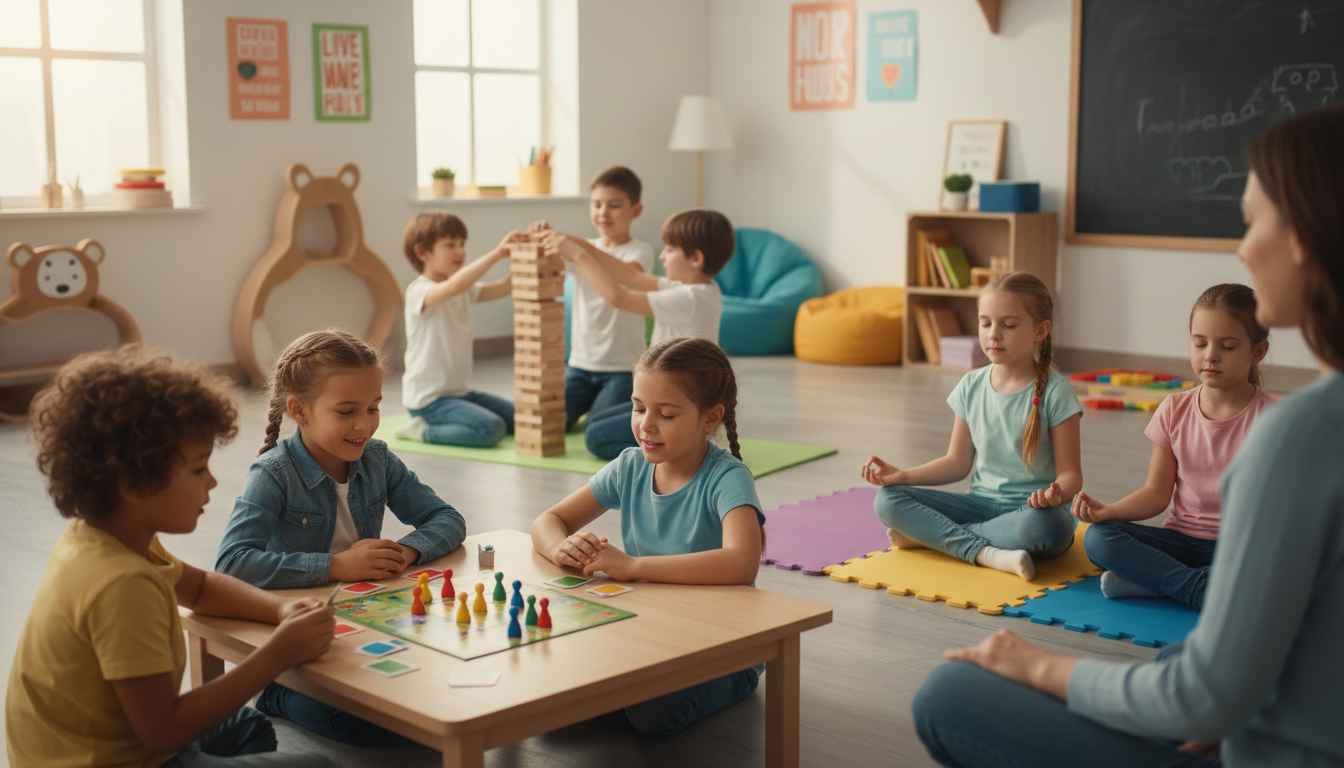
The elephant in the room is the challenge every parent and educator faces: children today are surrounded by instant gratification. From screens that reward a swipe to snacks that satisfy a craving immediately, the cultivation of self-control has never been more crucial – or more difficult. How do we teach kids the art of patience, the ability to pause before reacting, and the strength to focus on long-term rewards?
Enter the realm of self control games for kids, subtle yet powerful tools that shape behavior while making learning playful. At Magic House, children engage with interactive exhibits that require not only curiosity but also the discipline to navigate challenges thoughtfully. These games are more than entertainment – they are lessons in life, disguised as fun activities.
Understanding the Core of Self-Control in Children
Self-control is the ability to regulate thoughts, emotions, and impulses. Neuroscience tells us that the prefrontal cortex, the area responsible for decision-making and impulse control, develops gradually through childhood. Early experiences, games, and guided practice can strengthen these neural pathways, turning fleeting patience into a lifelong skill.
However, teaching self-control is not about forcing children into strict discipline; it is about providing opportunities where they can practice making choices, delaying gratification, and learning from outcomes. The most effective self control games for kids are those that create safe spaces for experimentation, reflection, and gentle challenge.
Case Study: The Mindful Marble Challenge
Imagine a game where children must move marbles from one bowl to another, but with a twist: if they rush, the marbles spill, and they start over. The goal is not speed but precision and patience. Over several sessions, children learn to monitor their impulses, manage frustration, and celebrate careful progress. This game mirrors real-world situations, teaching the value of measured actions over instant reaction.
Implementation Steps
1. Provide each child with two bowls and a set of marbles.
2. Introduce the rule: only one marble can be moved at a time.
3. If marbles are spilled, pause, reset, and discuss strategies.
4. Encourage reflection after each round: How did it feel to slow down? What strategies worked?
Decision Matrix: Choosing the Right Game for Your Child
| If Your Child… | Then Consider This Type of Game |
|---|---|
| Has high energy and struggles with patience | Games with physical restraint like “Freeze Dance” or “Red Light, Green Light” |
| Enjoys quiet, focused activities | Puzzle-based games, memory cards, or marble challenges |
| Loves social interaction | Group games requiring turn-taking or cooperative problem solving |
| Is frustrated easily or avoids challenges | Progressive skill-building games that reward small successes |
Top Self Control Games for Kids
1. The Waiting Jar
Children draw a card with a small task or reward and place it in a jar. They must wait for a timer to signal the end before retrieving the reward. This game teaches delayed gratification in a visual, tangible way.
2. Simon Says
Classic but effective, Simon Says requires listening, inhibition, and the ability to follow rules carefully. Kids learn that impulsive reactions can lead to mistakes, reinforcing the value of thoughtful response.
3. Mindful Breathing Game
Using a pinwheel or a bubble wand, children practice slow breathing to achieve a goal: keep the pinwheel spinning or bubbles intact. This not only strengthens impulse control but also introduces calming mindfulness practices.
Alternative Options for Different Budgets
Not every household or school can invest in elaborate games or museum visits. Here are alternatives:
- Low-cost: Paper-and-pencil games like “Dot-to-Dot Patience” or homemade card games that require turn-taking.
- Moderate-cost: Board games such as “Chess,” “Checkers,” or “Uno,” which build strategic thinking and impulse management.
- High-cost: Interactive museum experiences, specialized STEAM kits, or digital games designed for mindfulness and focus.
Potential Drawbacks and Who Should Avoid Certain Games
While self-control games are valuable, they may not suit every child in the same way. Highly anxious children may find competitive games stressful rather than educational. Similarly, kids with certain attention disorders might require modified versions to prevent frustration or disengagement. It is essential to observe reactions, adapt rules, and ensure the child experiences encouragement rather than pressure.
Incorporating Mindfulness into Everyday Play
Beyond structured games, the practice of mindfulness can be integrated into daily routines. Activities like mindful eating, listening walks, and reflective journaling help children observe impulses without immediate reaction. The underlying principle is simple: every pause is an opportunity to practice choice, patience, and awareness.
Measuring Progress and Celebrating Success
Progress in self-control is subtle. Parents and educators should track both behavioral improvements and emotional responses. Celebrating small wins, like waiting a few extra minutes for a snack or completing a puzzle without frustration, reinforces positive habits. Journaling or sticker charts can provide visual feedback and encourage continued practice.
Conclusion: The Art of Patience as Play
Self control games for kids are not merely entertainment – they are a training ground for life. By embedding mindfulness and patience into playful activities, children develop the neural and emotional foundations for resilience, focus, and thoughtful decision-making. Each game, each pause, each careful move is a small triumph against the culture of instant gratification. The ultimate lesson: the world rewards those who can wait, observe, and act with intention.