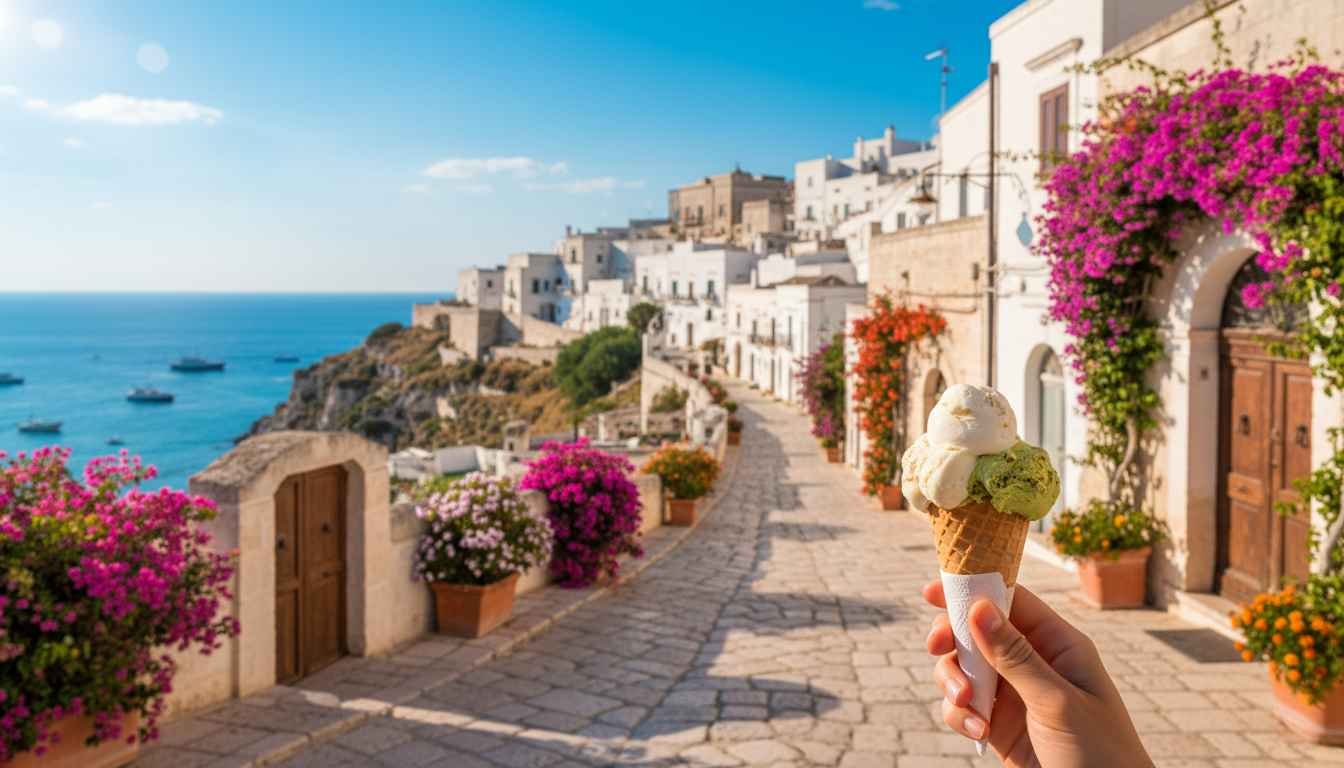
Drive south from Bari and something changes. The crowds thin, the light turns golden over olive groves, and the towns get stranger and more beautiful: conical stone houses in one valley, Baroque facades carved like lace in the next, and fishing villages perched on cliffs above a startlingly blue sea. This is Puglia — the heel of Italy’s boot — and asking where its best place is misses the point slightly, because Puglia rewards travellers who visit several of its places rather than one.
Still, if you want a single answer: for a first trip, base yourself between Alberobello and the Valle d’Itria for the countryside, add Lecce and the Salento coast for culture and sea, and finish with a cliff-top evening in Polignano a Mare. This guide explains why each of those places earns its spot — and how to combine them into a trip that feels unhurried rather than rushed.
Alberobello: The Town That Looks Like a Fairytale
Alberobello is Puglia’s most distinctive sight. Its old districts are built from trulli — small, whitewashed stone houses with conical roofs — and the town is listed as a UNESCO World Heritage Site. Wandering its narrow lanes, with trulli now housing shops, restaurants, and small guesthouses, feels unlike anywhere else in Italy.
Alberobello is small, and a few hours is enough to see it properly — which is why it works best as part of a Valle d’Itria itinerary rather than a multi-day base on its own. Pair it with nearby Locorotondo, a whitewashed hill town with circular streets and valley views, and Martina Franca, known for its Baroque centre. Together they show the countryside Puglia at its most charming, without the crowds of the coast.
Lecce: The Florence of the South
Lecce, often called the “Florence of the South,” is Puglia’s Baroque masterpiece. Its centre is built from a soft local limestone that glows honey-coloured in the evening light, carved into elaborate church facades, balconies, and doorways. The Basilica di Santa Croce and the Piazza del Duomo are the headline sights, but much of Lecce’s pleasure is simply walking: stopping for coffee, browsing artisan workshops, and eating well for less than you would in Rome or Florence.
Lecce also makes a practical base for the Salento peninsula. It has good transport links, a lively evening atmosphere, and a range of accommodation, and from here the Adriatic and Ionian coasts are both within easy reach.
Polignano a Mare and the Adriatic Coast
Polignano a Mare is Puglia’s postcard town: whitewashed houses on limestone cliffs above a small pebble beach, with the sea a deep, clear blue below. It is compact and popular — arrive early or stay for the evening, when day-trippers leave and the town belongs to its residents and overnight guests again.
Puglia’s Adriatic coastline stretches for hundreds of kilometres, mixing sandy beaches, rocky coves, and working fishing harbours. Punta Prosciutto, on the Ionian side, is known for wide white sand and shallow water, while the coast around Otranto offers cliffs, sea caves, and some of the region’s clearest swimming. The variety is the point: within an hour’s drive you can move from a sandy family beach to a wild, rocky cove.
Salento: Puglia’s Wild Southern Tip
Salento, the peninsula at Puglia’s southern tip, has its own slower rhythm. Ancient olive groves — some trees centuries old — line the roads between small towns, and the pace of life visibly relaxes as you head south. Otranto, on the Adriatic side, combines a Norman-era castle, a cathedral with a remarkable medieval mosaic floor, and a harbour made for evening walks. Gallipoli, on the Ionian side, is a fishing town on an island connected to the mainland, known for its old town lanes, seafood restaurants, and sunsets over the water.
Salento suits travellers who have already seen Puglia’s headline sights and want to linger: long lunches, beach days, and evenings in towns where tourism feels secondary to daily life. It is less polished than the Valle d’Itria and all the better for it.
Eating and Drinking Your Way Through Puglia
Puglia’s food is one of the strongest reasons to visit, and it is refreshingly unpretentious. Orecchiette — small ear-shaped pasta, traditionally made by hand — appears with broccoli rabe, tomato, or simple olive oil and garlic. Burrata, the creamy cheese that originated in Puglia, is best eaten fresh and locally. Seafood dominates the coastal menus, from raw fish in Gallipoli to grilled catches in Polignano, and the region’s olive oil is among Italy’s finest.
Wine lovers should try Primitivo, the region’s robust red, and the lighter rosés of Salento. Many wineries and masserie — fortified farm estates, some now converted into guesthouses — welcome visitors, and a tasting or a farm lunch often becomes a trip highlight. Puglia rewards eating where locals eat: look for busy, unpretentious trattorias rather than restaurants with picture menus on the main square.
Travellers exploring Italy beyond Puglia may also enjoy a look at the best places to visit in Italy that are not touristy, which puts Puglia’s quieter towns in context with other lesser-known Italian destinations. And for help deciding how Puglia fits into a wider European trip, the guide to choosing the best place in Europe to visit compares first-timer favourites, food regions, and beach destinations across the continent.
Practical Tips for Visiting Puglia
Getting there is straightforward: Bari and Brindisi both have airports, with Bari better placed for the Valle d’Itria and the Adriatic coast, and Brindisi closer to Lecce and Salento. Trains connect the main cities, but a car makes the countryside far easier — the trulli towns, olive groves, and coastal coves are best explored at your own pace, and parking in smaller towns is generally manageable.
Late spring and early autumn are the sweet spots: warm enough for swimming, mild enough for walking, and quieter than the August peak, when Italian holidaymakers fill the coast and prices rise. If you visit in summer, book accommodation early, plan sightseeing for mornings and evenings, and embrace the local rhythm of a long midday pause.
Base yourself in two places rather than one: a few nights in the Valle d’Itria or near Alberobello for the countryside, and a few nights in Lecce or on the Salento coast for the sea and Baroque towns. That split keeps driving times short and lets each part of Puglia show its character.
Final Thoughts
So where is the best place to visit in Puglia? If you must pick one town, pick Alberobello for sheer uniqueness — nowhere else looks like it. But Puglia’s real answer is a small circuit, not a single winner: trulli villages and olive groves inland, Baroque Lecce in the middle, and the cliffs and beaches of Salento and Polignano at the edges, all joined by food that is simple, fresh, and deeply local. Visit Puglia that way — slowly, hungrily, and with a car — and you will understand why travellers who discover it tend to return.
FAQ
What is Puglia best known for?
Its trulli houses in Alberobello (a UNESCO World Heritage Site), Baroque Lecce, long Adriatic and Ionian coastlines, ancient olive groves, and food — especially orecchiette pasta, burrata, seafood, and Primitivo wine.
How many days do I need in Puglia?
Five to seven days works well: two or three nights in the Valle d’Itria area for Alberobello and the countryside, and three or four nights in Lecce or Salento for the coast, food, and Baroque towns.
Do I need a car in Puglia?
It is highly recommended. Trains serve the main cities, but the trulli towns, rural masserie, and coastal coves are much easier to reach — and enjoy — with a car.